






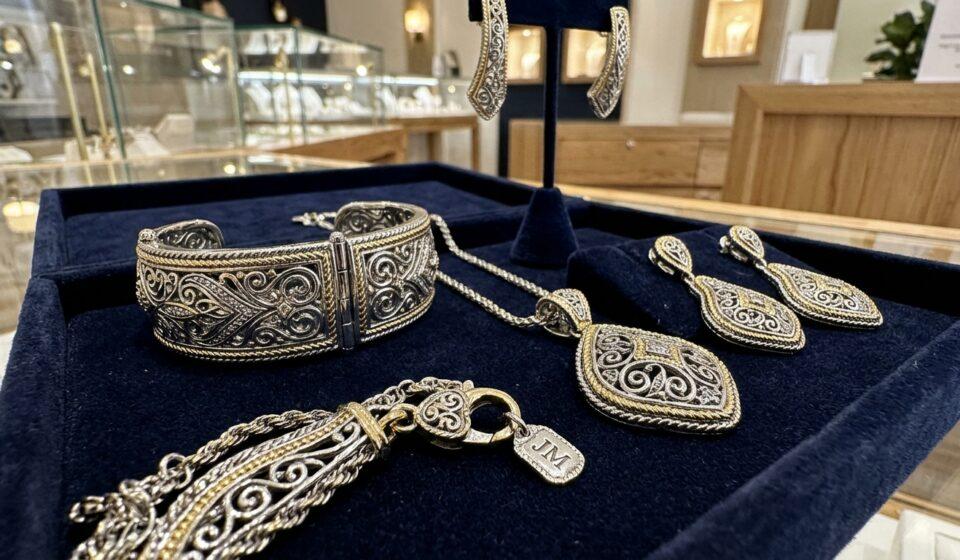

You have probably seen it happen. Someone picks up a beautiful piece online, falls in love with the design, pays good money, and then holds it in their hands and immediately knows something is wrong. The finish is thin, the stones wobble, and the clasp feels like it came off a keychain. With John Medeiros building a loyal following over the past two decades, imitations have crept in. If you are shopping for a piece from this collection, here is what to look for before you spend a dollar.
The Legacy of John Medeiros: What Sets Authenticity Apart
John Medeiros made his way to America when he was nine. Then by twelve he was running production lines in the Providence, Rhode Island, jewelry district after school, like it was normal. By 1985 he had already built Tahoe Jewelry, doing polishing and stone-setting work for big names like Gucci. In the year 2000, he launched the collection that carries his name, and to this day, every piece is crafted in Rhode Island, from concept to completion. This commitment to local production is increasingly rare in today’s market. The significance of this narrative lies in the fact that the entire brand is founded on handcrafting in the United States. Once you are aware of what to look for and how to evaluate the quality of an item based on its feel, you will be able to tell the difference between items that are handcrafted and those that are produced on a factory line.
Examine the Materials and Construction Quality
Real pieces use a lead-free premium alloy base with 0.05% silver. It’s strong and also noticeably lightweight, so a piece should feel solid, not heavy or clunky. The finish is either rhodium or 14-karat gold electroplate. Rhodium is a platinum derivative, harder than most plating metals, and it keeps that bright cool-white look for years, instead of going brassy or dull fast like lesser coatings do.
Hold the piece and examine the edges. Run your thumb along the back, and don’t only check the side that shows off. Genuine work stays smooth everywhere; counterfeits often slip up at the edges first, where the finish looks uneven or the metal feels rough, like grainy bumps. Watch for a flimsy build, visible seams from bad mold work, and plating that looks inconsistent in thickness. If it feels hollow or just cheap in your grip, trust that gut feeling.
Look at How the Stones Are Set
This line uses cubic zirconia, picked for optical quality and durability. Good CZ doesn’t chip, crack, or turn cloudy the way cheaper synthetic stones do. When it’s set properly, it catches light cleanly, not randomly. And that’s the part where fakes tend to fall apart.
Each authentic piece has prong-set stones. No glue, ever. The prongs should be tidy, consistent, and sit flush to the stone with no gaps you can see. Tilt the piece toward light and just watch what happens; the reflection should look even and repeatable. If one side looks cloudy, if the stones seem loose in their settings, or if you notice small white residue around the base spot, that often points to adhesive-set work, which is a common shortcut in imitation pieces and not something the real collection leans on.
Inspect the Construction Details Closely
Mass-produced knock-offs usually can’t copy what actually goes into an authentic build. Genuine closures are often designed in a unique way; some are hidden on purpose so they blend into the motif, not sticking out like a generic toggle or lobster clasp. On bracelets and necklaces, the chain sections and ends are joined during casting, not soldered on after the fact. Multi-strand designs also sit and move naturally, instead of twisting weirdly and bunching up the way cheaply assembled alternatives do.
Earring posts are made from surgical-grade steel, chosen for people with sensitive ears or metal allergies. If the post feels flimsy, shows oxidation, or looks like a generic finding, that’s a real yellow flag. Flip the piece over and inspect the back. Handcraft usually means consistent detail on every surface; if the back looks rushed or ignored, the front is probably not as impressive as it’s trying to look.
Verify the Branding and Registration
A registration page is available on the official John Medeiros website. This page allows customers to record their purchases and link them directly to the brand. This option is not available to sellers of counterfeit goods because it is not possible for them to do so. The completion of the registration process results in the creation of a paper trail that cannot be followed by a transaction that takes place in an unofficial marketplace.
Furthermore, where you buy matters almost as much as what you buy. This collection is sold through authorized independent retail stores and via the brand’s own website. If you spot a piece on a secondary platform at a price that looks way below retail, slow down and treat it like a clue. Sellers with no history, unclear return rules, and no verifiable provenance are typical patterns when imitation goods show up. A significant discount on a designer item does not necessarily mean it’s a great deal; it’s a matter worthy of careful consideration.
Trust the Feel That Only Handcrafting Delivers
Every piece in this collection goes through this twenty-step production process, and it’s made by hand in the United States by craftspeople; a lot of them have been doing the work for more than twenty-five years. You can sense the craftsmanship in the final product. The design seems on purpose. The finish stays steady from front to back. And the build feels put together with attention, not just rushed or quick.
Looking over the materials, the stone setting, the construction details, and even where a piece came from takes maybe five minutes. All four of those things together are genuinely tough to copy at the same time, so if someone is investing in John Medeiros jewelry, that quick check is a pretty solid way to be sure the item you’re getting is really the one you’re paying for.