







User Experience (UX) is one of the most important elements of modern website design and development. It refers to the overall experience visitors have when interacting with a website, application, or digital product. A good user experience makes it easy for visitors to find information, navigate pages, complete actions, and achieve their goals without confusion. Whether you run a small business or a large company, focusing on user experience can help improve customer satisfaction, engagement, and conversions.
What Is User Experience (UX)?
User Experience refers to how people feel when using a digital product or service. It includes several aspects, such as website navigation, page loading speed, visual design, accessibility, content organization, and mobile responsiveness.
A website with good UX provides a smooth and enjoyable browsing experience. Visitors should be able to understand the website’s purpose, locate important information, and interact with different elements without facing unnecessary difficulties.
For example, an ecommerce website should make it simple for customers to browse products, compare prices, add items to their shopping carts, and complete purchases.
Why Is User Experience Important?
User experience directly influences how visitors interact with your website. A poorly designed website can frustrate users and encourage them to leave without exploring your services or products.
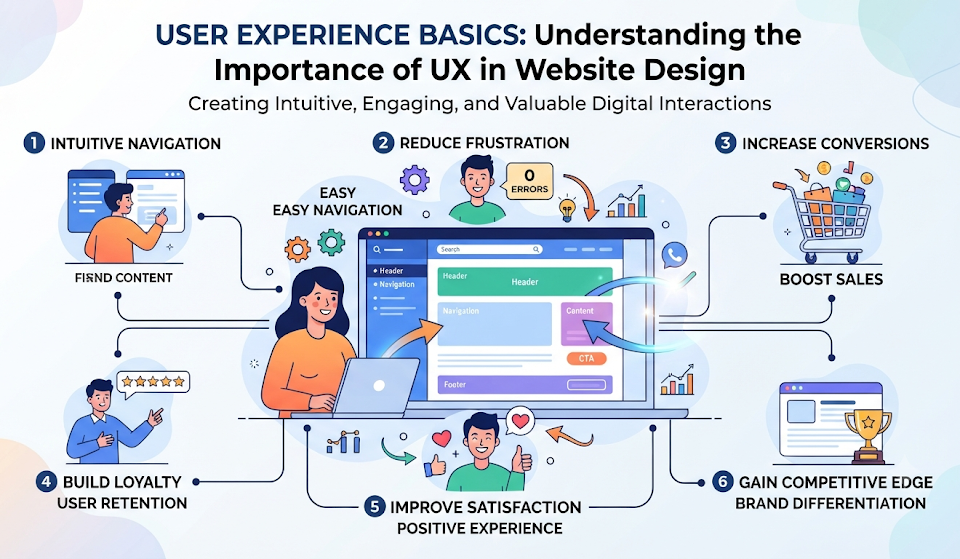
Here are some important benefits of good UX:
1. Improves Customer Satisfaction
A simple, organized, and easy-to-use website creates a positive impression. When visitors can quickly find what they need, they are more likely to enjoy their experience and return in the future.
2. Increases Website Conversions
Good UX guides visitors toward important actions, such as purchasing products, submitting contact forms, or requesting services. Clear calls to action and simple navigation can help increase conversion rates.
3. Reduces Bounce Rates
Slow-loading pages, confusing layouts, and complicated navigation can cause visitors to leave a website. Improving these elements encourages users to explore more pages and spend additional time on your website.
4. Builds Brand Credibility
A professional and user-friendly website creates trust. Visitors often associate a smooth browsing experience with a reliable business, making UX an important part of building a strong online reputation.
Essential Elements of Good User Experience
Creating an effective user experience requires attention to several important factors:
-
Simple Navigation: Organize menus and website sections so visitors can easily find relevant information.
-
Mobile Responsiveness: Ensure your website works properly on smartphones, tablets, laptops, and desktop computers.
-
Fast Loading Speed: Optimize images, scripts, and other website elements to improve loading performance.
-
Readable Content: Use clear headings, short paragraphs, appropriate fonts, and proper spacing.
-
Consistent Design: Maintain consistent colors, typography, buttons, and layouts throughout the website.
-
Accessibility: Design your website so people with different abilities can access and interact with its content.
-
Clear Calls to Action: Use visible and meaningful buttons to guide visitors toward the next step.
Best Practices for Improving User Experience
Start by understanding your target audience and identifying what visitors expect from your website. Conduct user research, collect feedback, and analyze website performance to discover areas that need improvement.
Use simple layouts and avoid unnecessary design elements that distract visitors. Make important information easy to find and ensure that forms, buttons, and links work correctly.
Regularly test your website across different browsers and devices. Usability testing can also help identify navigation problems and confusing design elements before they affect a larger audience.
Conclusion
User Experience Basics are essential for creating a successful website that meets customer expectations and supports business growth. A user-friendly website improves navigation, builds trust, encourages engagement, and helps turn visitors into customers.
Investing in professional UX design and website development can make a significant difference to your online presence. Digitaladdex helps businesses create modern, responsive, and user-friendly websites designed to deliver better digital experiences and support long-term business success.