






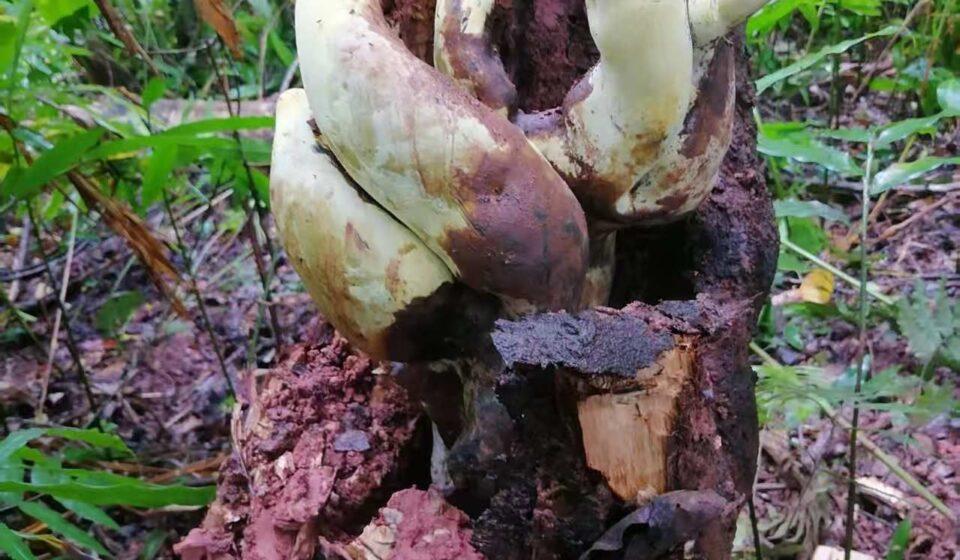

A remarkable biological finding has caught the attention of researchers and nature enthusiasts worldwide. A newly identified species of giant fungus, named Dianjunus rex, has been discovered in China. Reaching heights of up to 20 inches, this towering specimen offers an extraordinary glimpse into fungal evolution, having emerged in the evolutionary wake of the mass extinction event that wiped out the non-avian dinosaurs.
This discovery provides crucial scientific context regarding how fungal life adapted, expanded, and thrived during pivotal periods in Earth's geological history. Below is an in-depth examination of what has been confirmed about Dianjunus rex, along with essential background on paleomycology, fungal biology, and the critical role fungi play during global ecological transitions.
Confirmed Details of the Discovery
According to research initial reporting, the discovery introduces key facts regarding the morphology and origin of this unique organism:
- Scientific Name: Dianjunus rex
- Geographic Location: Discovered in China
- Physical Size: Reaches heights of up to 20 inches (approximately 50 centimeters) tall
- Evolutionary Timeline: Emerged shortly after the mass extinction event that eliminated the dinosaurs
For a fungal fruiting body, reaching a height of 20 inches represents an exceptional scale compared to typical modern mushroom species, making Dianjunus rex a standout subject for fungal taxonomy and paleobiological research.
The Post-Extinction World: How Fungi Thrived
The timing of Dianjunus rex's emergence shortly after the mass extinction that wiped out the dinosaurs places it in a uniquely turbulent era of Earth's biological history. The Cretaceous-Paleogene (K-Pg) boundary, approximately 66 million years ago, was marked by catastrophic climate changes, global fires, and widespread atmospheric debris that blocked sunlight.
The Fungal Spike Hypothesis
During major global extinction events, photosynthetic plants and large herbivorous and carnivorous animals experienced massive die-offs. However, while sunlight-dependent plant life suffered severely, organisms that feed on dead organic matter—known as saprotrophs—encountered an unprecedented abundance of nutrients.
- Massive Biomass Accumulation: Fallen trees, decaying vegetation, and animal remains created vast ecological niches for decomposers.
- Fungal Proliferation: Paleontologists and palynologists (scientists who study microscopic organic particles) frequently observe a sharp rise in fossilized fungal spores across boundary sediments worldwide, often referred to as a "fungal spike."
- Ecosystem Reset: Fungi played a primary role in processing the massive influx of decaying organic matter, recycling nutrients back into the soil, and laying the groundwork for plant recovery during the Paleogene period.
The emergence of a large species like Dianjunus rex within this historical timeframe highlights how certain fungal lineages exploited these resource-rich post-extinction landscapes to grow to impressive sizes.
Fungal Growth and Scale: Understanding Macrofungi
To understand how a species like Dianjunus rex could achieve a height of 20 inches, it is helpful to explore the underlying biology of macrofungi and how fungal structures develop.
Fruiting Bodies vs. Mycelial Networks
When people refer to mushrooms or giant fungi, they are typically describing the external reproduction structure known as the fruiting body (or sporocarp). The main organism actually exists beneath the surface or within the substrate as an extensive network of microscopic threads called mycelium.
- Mycelium: Acts as the vegetative body, absorbing nutrients through extracellular digestion from surrounding soil, wood, or organic debris.
- Fruiting Body: Constructed primarily to produce and distribute reproductive spores into the air currents.
- Resource Requirements: Producing a fruiting body up to 20 inches tall requires significant metabolic energy and a dense, nutrient-rich substrate to support such rapid structural development.
Comparative Scale in the Fungal Kingdom
While 20 inches is remarkably large for a typical standing fungal fruiting body, the kingdom Fungi displays extreme variations in size across different lineages and geological eras:
- Prehistoric Giants: In ancient geological epochs prior to the dinosaur era, such as the Silurian and Devonian periods, organisms known as Prototaxites grew up to 20 feet tall, dominating early terrestrial landscapes long before large trees evolved.
- Subterranean Giants: Modern underground mycelial mats, such as the famous Armillaria ostoyae (honey mushroom) in Oregon, spread across thousands of acres underground, representing some of the largest living organisms by area and mass, even though their individual surface mushrooms remain modest in size.
- Surface Macrofungi: Standing species that produce aerial fruiting structures over a foot tall are relatively rare, which makes the height of Dianjunus rex particularly significant for researchers mapping macrofungal diversity.
Scientific Importance of the Discovery in China
China is home to some of the world's most biodiverse micro-climates and richest fossil beds, spanning southwestern rainforest regions, temperate forests, and ancient sedimentary basins. The discovery of Dianjunus rex adds an important chapter to regional and international mycological studies.
Why Paleomycology and Fungal Taxonomy Matter
Historically, paleontology focused predominantly on vertebrate skeletons, marine invertebrates, and plant leaves. Fungi, due to their soft tissue composition, do not fossilize as easily as bone or dense wood. Consequently, every major discovery of an intact or structural giant fungal lineage provides vital data point for scientists.
- Mapping Evolutionary Lineages: Studying the morphology and evolutionary timing of Dianjunus rex helps mycologists determine how modern fungal families diversified.
- Understanding Ancient Climates: Fungal growth patterns offer indirect evidence regarding humidity, atmospheric conditions, and substrate composition during critical recovery phases following extinction events.
- Biotechnological Insights: Deepening our understanding of unique macrofungal structures can inform modern applications in biomaterials, mycoremediation, and pharmaceutical chemistry.
Distinguishing Confirmed Facts from Background Science
When reviewing scientific announcements, it is essential to distinguish between directly confirmed details and broader ecological context:
- Directly Reported Facts: The species name (Dianjunus rex), location of discovery (China), maximum height (up to 20 inches tall), and evolutionary emergence window (shortly after the mass extinction that wiped out the dinosaurs) are confirmed details from the primary source.
- Broader Context: General theories regarding post-extinction fungal spikes, saprotrophic nutrient cycling, and macrofungal growth mechanics represent established scientific background used to explain the environmental setting in which such organisms developed.
Conclusion
The discovery of Dianjunus rex in China serves as a powerful reminder of nature's resilience and evolutionary creativity. Standing up to 20 inches tall and arising in the aftermath of one of the planet's most devastating mass extinction events, this giant fungus underscores the crucial role that fungal life has played throughout Earth's biological history. As researchers continue to study this species and its historical lineage, Dianjunus rex promises to shed new light on how organisms adapted to reform terrestrial ecosystems in the post-dinosaur era.
Sources