




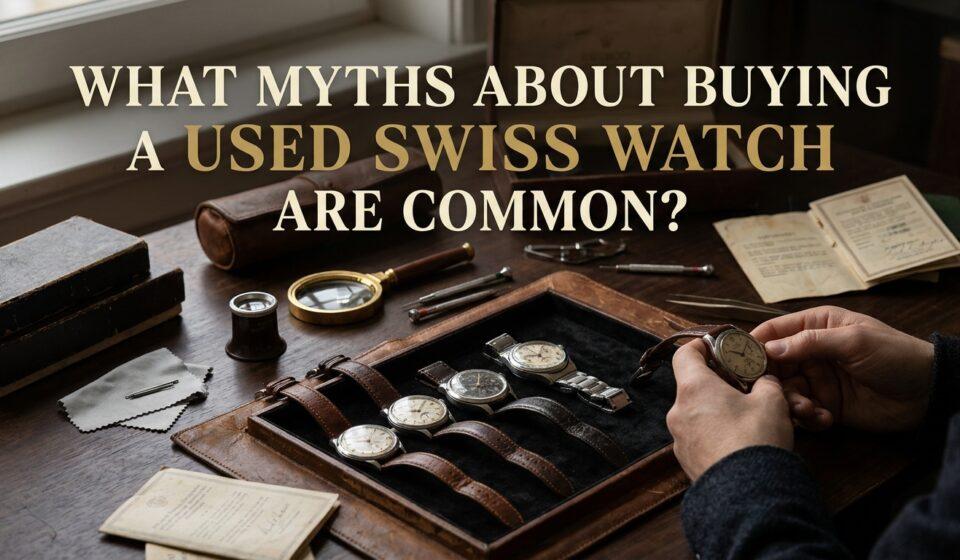

Buying a pre-owned timepiece can feel like navigating a minefield if you let misinformation do the steering. The secondary watch market is bigger than it has ever been, and yet it remains one of the most misunderstood corners of collecting. For every genuine opportunity on offer, there is a stubborn myth waiting to steer you in the wrong direction. Whether you are picking up your first piece or adding to an established collection, knowing what is actually true versus what has simply been repeated often enough to feel credible makes a genuine difference. Many of the most persistent misconceptions about buying a used Swiss watch exist because of fear, loose marketing language, and a general lack of transparency around how these timepieces change hands. Here is what buyers keep getting wrong.
Myth 1: A Used Swiss Watch Is Always a Fake
This is probably the most damaging idea circulating in the secondary market. Many buyers hesitate to purchase pre-owned timepieces simply because they assume counterfeit risk is everywhere and overwhelming. The situation is more complicated than that. Fakes exist, and due diligence is always necessary, but the pre-owned market today is far more regulated than it was ten years ago. Reputable dealers authenticate every piece before listing. Certified pre-owned programs from established retailers include full verification of internal and external components. The practical response is not to avoid the market entirely but to learn which sellers are worth trusting.
Myth 2: No Box and Papers Means the Watch Is Worthless
Documentation adds desirability and can nudge resale prices, but missing paperwork does not make a watch worthless or automatically suspicious. Many legitimate pieces change hands across multiple owners over decades and paperwork simply disappears along the way. What matters far more is the condition of the movement, the originality of the components, and whether the watch has been properly maintained. An expert can authenticate a watch thoroughly without its original box. Prioritizing mechanical integrity over paper collectibles is usually the smarter call, and treating the absence of a warranty card as a dealbreaker often means walking away from watches that are perfectly fine.
Myth 3: Pre-Owned Watches Always Need Expensive Repairs
Some buyers assume that any watch previously worn must be on the verge of mechanical failure. It is not an unreasonable fear, but it is not an accurate one either. A well-maintained timepiece from a quality manufacturer can run reliably for years without needing immediate attention. That said, unless you have documented service history with dates and a reputable name attached, budget for the possibility of a service rather than assuming it will not be needed. A polished case tells you nothing about what is happening inside the movement. Factor potential service costs into your price evaluation rather than using the possibility as a reason to walk away entirely.
Myth 4: Pre-Owned Always Beats Buying New as an Investment
The idea that buying pre-owned automatically protects your investment better than buying new gets repeated constantly, and it oversimplifies things considerably. What actually drives long-term value is disciplined buying: the right reference, in solid condition, at a price that makes sense. A new watch purchased at a competitive market price can hold its value just as well as a pre-owned model over time. Buying a pre-owned watch at an inflated price because of market hype means you have absorbed a premium without gaining any advantage from it. Entry price matters more than whether the watch is new or used, and forgetting that is how buyers end up disappointed.
Myth 5: “Swiss Made” Guarantees the Entire Swiss Watch Was Built in Switzerland
This one catches people off guard even after years in the hobby. The “Swiss Made” designation is governed by regulation, but it does not mean the watch was manufactured entirely in Switzerland. Under current rules, only around 60 percent of the production work needs to have taken place there. This matters when evaluating pre-owned pieces because buyers sometimes pay a premium based on a geographic assumption the label does not actually support. A Swiss-made watch is still a quality product, but its worth comes from movement quality, craftsmanship, and brand heritage rather than what the label implies about its country of origin.
Myth 6: A Polished Case Means the Watch Has Been Well Cared For
A glossy exterior can be a warning sign rather than a reassurance. When a watch is polished too aggressively, the original definition of its case edges gets softened or lost. For collectors, originality of condition carries weight, particularly in vintage and discontinued references. A watch with honest wear, small scratches, and signs of natural aging can be more desirable than one that has been buffed to look brand new. Always look at service records to understand what kind of work has actually been done, because a heavy polish sometimes means prior condition issues were being hidden rather than fixed.
Myth 7: Genuine Pre-Owned Watches Only Come From Authorized Dealers
Many buyers assume the only safe path to a legitimate pre-owned piece is through a brand’s authorized retail network. Authorized dealers offer real assurances, but the independent pre-owned market is home to some of the most knowledgeable authenticators working in watches today. Established independent dealers build their entire reputation on each sale they make, and many offer warranties of one to three years alongside detailed condition reports. Authorized dealers also rarely carry discontinued, vintage, or limited references, which is exactly where the secondary market’s depth lies. A buyer who does their homework can find exceptional pieces outside official retail with complete confidence.
The Bottom Line
Most of the fear surrounding the used watch market is built on myths rather than experience. The secondary market has real depth, and buyers who take the time to understand it find genuine value that the retail channel simply cannot offer. What actually matters is condition, provenance, a seller worth trusting, and a price that reflects reality rather than hype. Papers, polish, and labels are secondary. If these myths have kept you on the sidelines, that hesitation is worth revisiting. A used Swiss watch bought with knowledge and patience can be one of the most satisfying purchases you make, and it rarely resembles the cautionary tale the myths would have you expect.