






Many supply chain businesses continue to depend on technology implemented years ago. These systems manage important activities such as procurement, inventory control, warehouse operations, order processing, and transportation.
Although they may still support everyday business requirements, their limitations become more noticeable as operations expand. Employees spend time handling manual updates, different departments work with inconsistent information, and integrating newer applications becomes increasingly difficult.
The challenge for supply chain leaders is not simply deciding whether existing systems need modernization. It is finding a way to improve technology without interrupting the operations that keep the business running.
Replacing an entire technology environment is not always necessary. A phased modernization approach can help organizations improve existing systems, introduce new capabilities, and maintain business continuity throughout the process.
Why Legacy Supply Chain Systems Become Difficult to Maintain
Older enterprise applications are often deeply connected to everyday business activities. Over time, organizations build additional workflows, integrations, and custom functionalities around them.
This makes modernization more complicated than simply installing new software.
Some common challenges include:
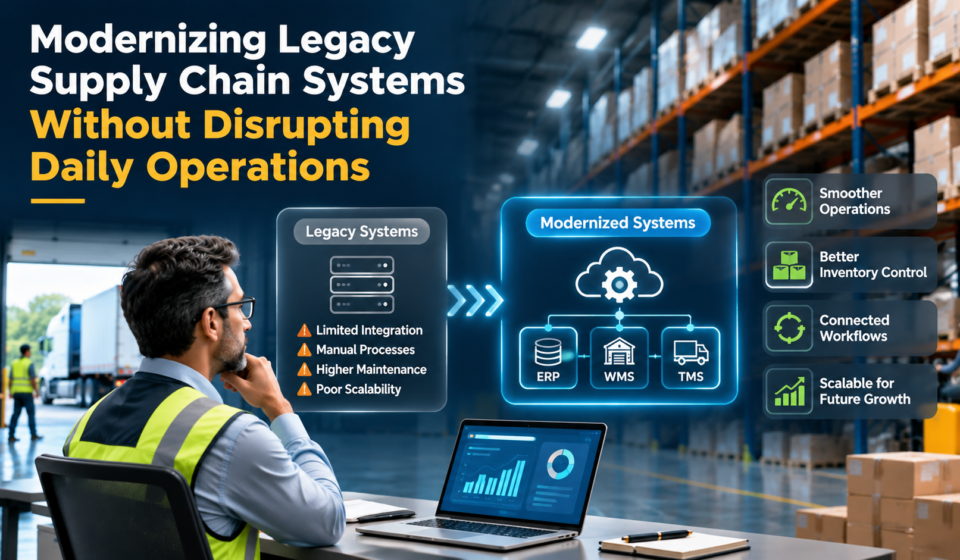
- Limited integration capabilities: Older applications may not support modern APIs or efficient data exchange with newer platforms.
- Manual operational processes: Employees continue relying on spreadsheets, emails, and repetitive data entry to complete routine activities.
- Inconsistent information: Inventory, order, and shipment records may differ across applications because updates are delayed or manually maintained.
- Increasing maintenance requirements: Technology teams spend considerable time supporting outdated components and resolving recurring technical issues.
- Limited scalability: Existing systems may struggle to support higher transaction volumes, additional warehouses, or expanding business operations.
These limitations can affect productivity and make it harder for organizations to respond to changing customer and operational requirements.
Why Replacing Everything at Once Can Create More Problems
A complete system replacement may appear to be a straightforward way to address outdated technology. However, enterprise supply chain environments rarely operate through isolated applications.
An ERP platform may support procurement and financial processes, while warehouse and transportation systems handle inventory movements and deliveries.
Replacing one platform can affect several connected workflows.
A large-scale replacement may introduce challenges such as:
- Temporary interruptions in order processing and fulfillment.
- Complex data migration and validation requirements.
- Additional employee training and process adjustments.
- Integration dependencies between existing and new applications.
- Unexpected implementation costs and operational risks.
For businesses managing continuous shipments, supplier relationships, and customer commitments, these challenges require careful planning.
A more practical strategy is to modernize systems in stages, prioritizing improvements that deliver operational value while minimizing disruption.
How to Modernize Legacy Supply Chain Systems Without Interrupting Operations
Successful modernization begins with understanding which systems need improvement and how those changes can be introduced safely.
1. Assess Existing Systems and Operational Dependencies
Before making technology changes, organizations should evaluate their existing applications, integrations, and business workflows.
This assessment helps identify which systems remain reliable and which components create operational limitations.
Supply chain leaders should examine:
- Current ERP, WMS, and TMS capabilities.
- Existing application integrations and data flows.
- Manual processes that create recurring delays.
- Legacy components that require frequent maintenance.
- Critical workflows that cannot tolerate interruptions.
This assessment provides a clearer picture of modernization priorities and helps avoid replacing technology that still delivers business value.
2. Prioritize High-Impact Modernization Opportunities
Not every system needs to be upgraded at the same time.
Businesses should identify operational areas where targeted improvements can create meaningful results.
For example, a distributor experiencing inventory discrepancies may first improve communication between its ERP and warehouse management systems.
A logistics provider struggling with shipment visibility may prioritize transportation data integration.
Useful starting points include:
- Automating repetitive data transfers.
- Improving inventory synchronization.
- Modernizing outdated application interfaces.
- Connecting supplier and carrier platforms.
- Improving operational reporting and dashboards.
This approach allows organizations to address specific problems without introducing unnecessary changes across their entire technology environment.
3. Modernize Through Integration Instead of Immediate Replacement
One effective way to extend the value of legacy applications is to improve how they communicate with newer technologies.
APIs, integration platforms, and appropriate data exchange mechanisms can connect existing applications with modern business tools.
For example, an organization may retain its existing ERP while introducing improved connections with warehouse and transportation systems.
This can help create more consistent information flows without requiring an immediate replacement of the core platform.
Integration also provides flexibility for future modernization initiatives as business requirements evolve.
4. Introduce Changes Through Phased Implementation
A phased implementation approach helps businesses manage modernization without changing every operational process simultaneously.
Instead of migrating the entire technology environment at once, organizations can introduce improvements within selected workflows or departments.
A practical implementation sequence may include:
- Assessment: Identify existing limitations, system dependencies, and operational risks.
- Planning: Define modernization priorities, technical requirements, and implementation milestones.
- Pilot: Introduce changes within a limited operational area and validate their performance.
- Transformation: Gradually extend successful improvements across additional systems and workflows.
- Continuous improvement: Monitor system performance, resolve integration issues, and adapt technology as requirements change.
This approach gives teams opportunities to identify problems early and make adjustments before expanding implementation.
5. Protect Business Data During Migration
Data migration is one of the most important parts of any legacy modernization initiative.
Supply chain applications contain information about products, inventory, suppliers, purchase orders, customers, and shipments.
Errors during migration can affect daily operations and create inconsistencies across departments.
Organizations should establish clear data validation procedures before moving information between platforms.
Important considerations include:
- Reviewing data quality before migration.
- Removing duplicate or outdated records where appropriate.
- Maintaining consistent data formats.
- Validating migrated information against existing records.
- Establishing backup and recovery procedures.
- Keeping rollback plans available for critical changes.
Testing data before and after migration helps reduce the risk of unexpected operational issues.
6. Prepare Employees for Technology Changes
Technology modernization also changes how employees perform their daily responsibilities.
Warehouse teams, procurement specialists, logistics coordinators, and finance employees may need to adapt to updated workflows and application interfaces.
Without proper preparation, even technically successful implementations can create operational difficulties.
Businesses should involve relevant employees during planning and testing.
Providing practical training, clear process documentation, and support during implementation helps teams adjust more comfortably to new systems.
How to Measure the Success of Supply Chain Modernization
Modernization should be evaluated through improvements in business operations rather than the number of applications upgraded.
Supply chain leaders should monitor indicators that reflect the actual impact of technology changes.
Important performance measures include:
- Order processing time: Whether orders move through the business more efficiently.
- Inventory accuracy: Whether stock information remains consistent across systems.
- Manual processing effort: Whether employees spend less time transferring and reconciling information.
- System availability: Whether critical applications remain accessible during modernization.
- Integration reliability: Whether information moves consistently between connected platforms.
- Shipment performance: Whether warehouse and transportation coordination improves.
Reviewing these indicators helps organizations understand whether modernization investments are delivering practical business value.
Building a More Flexible Supply Chain Technology Environment
Legacy modernization is not simply about replacing outdated applications. It is about creating a technology environment that supports current business requirements while remaining flexible enough for future growth.
Businesses can benefit from working with technology partners that understand enterprise integration, legacy application modernization, workflow automation, and connected systems.
Ditstek Innovations helps organizations address these challenges through supply chain technology solutions, focusing on modernizing existing platforms, improving system connectivity, and building scalable digital capabilities.
The objective is to help businesses improve operational performance without making unnecessary changes to technology that continues to support their operations.
Conclusion
Modernizing legacy supply chain systems does not require businesses to replace every application or interrupt their daily operations.
A structured approach built around assessment, targeted integration, phased implementation, and data validation can help organizations improve technology while protecting critical business workflows.
For supply chain leaders, the priority should be identifying which systems need attention, understanding their operational dependencies, and introducing improvements that support long-term business performance.
With the right modernization strategy and supply chain digital transformation services, businesses can maximize existing technology investments while building more connected, efficient, and scalable supply chain operations.