





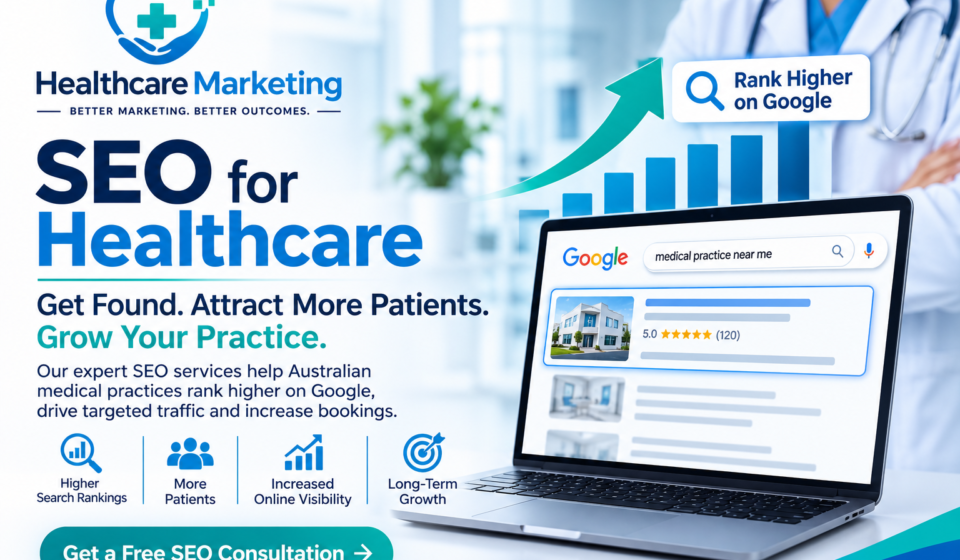

A healthcare website plays an important role in helping people discover medical services, understand available treatments and find relevant practitioner information. However, having a website alone does not guarantee visibility in Google search results.
Healthcare businesses need a structured search engine optimisation strategy to make their websites easier to discover and navigate.
Effective SEO for healthcare involves several activities, including keyword research, quality content creation, technical improvements, local optimisation and trust-building.
Here are some practical SEO strategies healthcare websites can use to improve their organic search performance.
1. Conduct Thorough Healthcare Keyword Research
Keyword research helps identify the terms people use when searching for medical services and healthcare information.
Start by identifying the main services offered by the practice and researching relevant search queries.
Examples include:
- General practitioner services
- Dental clinic in Melbourne
- Physiotherapy services
- Specialist medical clinic
- Healthcare services near me
Healthcare providers should consider search intent when choosing keywords.
Some users are looking for general information, while others want to find a clinic or understand how to access a particular service.
Creating content that matches these different needs can help attract more relevant organic visitors.
2. Create Dedicated Service Pages
Every important healthcare service should have a clear and informative website page.
Rather than listing every service in a single paragraph, medical practices can create dedicated pages explaining individual services.
A useful service page should include:
- An accurate service description
- Relevant practitioner information
- General information about the service
- Frequently asked questions
- Contact information
- Appropriate appointment details
These pages should answer common questions without making unsupported treatment claims or promising specific clinical outcomes.
3. Publish Helpful and Reliable Blog Content
Educational blog content can help healthcare websites address questions people search for online.
For example, a medical practice could publish articles about general healthcare topics, appointment preparation or common questions about its services.
Useful content ideas include:
- What Should Patients Know Before Visiting a Medical Clinic?
- How Can You Prepare for Your First Physiotherapy Appointment?
- What Questions Should You Ask a Healthcare Professional?
- What Services Does a General Medical Practice Provide?
Content should be accurate, relevant and reviewed by appropriately qualified professionals where necessary.
Avoid publishing large amounts of generic or automatically generated content that provides little value to readers.
4. Improve On-Page SEO Elements
On-page SEO helps search engines understand what individual pages are about.
Important elements include:
Title tags: Create unique titles that describe each page clearly.
Meta descriptions: Write useful summaries that explain what visitors can expect.
Heading structure: Use descriptive H1 and H2 headings to organise content.
Internal linking: Connect relevant service pages, articles and other useful resources.
Image optimisation: Use descriptive file names and appropriate alt text.
URLs: Keep page addresses short, clear and descriptive.
These elements help improve website organisation and make content easier to understand.
5. Strengthen Local SEO
For medical practices that serve particular communities, local search optimisation should be an important part of the strategy.
Healthcare providers should maintain an accurate Google Business Profile and ensure their business details are consistent across relevant online directories.
Location-specific service pages can also help people find information about clinics operating in different areas.
However, location content should be genuine and useful rather than created simply to repeat city names and keywords.
6. Improve Website Speed and Mobile Performance
Website performance affects the experience visitors have when accessing healthcare information.
Slow pages, broken links and difficult navigation can discourage people from exploring a website.
Healthcare businesses should regularly review:
- Mobile responsiveness
- Page loading speed
- Image sizes
- HTTPS security
- Website navigation
- Broken links
- Core Web Vitals
Tools such as Google PageSpeed Insights can help identify technical improvements.
7. Demonstrate Experience and Trustworthiness
Healthcare websites cover subjects that may influence people’s health decisions. Therefore, accuracy and credibility are especially important.
Medical practices should provide transparent information about their practitioners, relevant qualifications, services and professional experience.
Other useful trust signals include:
- Clear business contact information
- Practitioner biographies
- Author and reviewer details
- Reliable references for medical information
- Regular content reviews
- Transparent service descriptions
These practices support content quality and help visitors understand who is providing the information.
8. Build Relevant and Quality Backlinks
Backlinks from reputable and relevant websites can support SEO by helping search engines discover pages and understand their context.
Healthcare providers can explore opportunities through professional organisations, relevant industry publications and legitimate healthcare directories.
Avoid link schemes, irrelevant backlink packages and manipulative practices.
9. Monitor SEO Performance
SEO improvements should be measured regularly.
Google Search Console helps track search impressions, clicks, queries and indexing issues.
Other analytics tools can provide information about website traffic and user behaviour, subject to appropriate privacy controls.
Reviewing this information helps healthcare providers identify opportunities, update underperforming pages and improve their content strategy.
Conclusion
The most effective SEO strategies for healthcare websites combine keyword research, informative content, technical optimisation, local SEO and trustworthy website information.
Healthcare providers should focus on creating useful resources that meet visitors’ needs rather than simply trying to repeat keywords.
With a consistent seo for healthcare strategy and support from professional healthcare marketing services, medical practices can build a stronger foundation for long-term organic search visibility.