

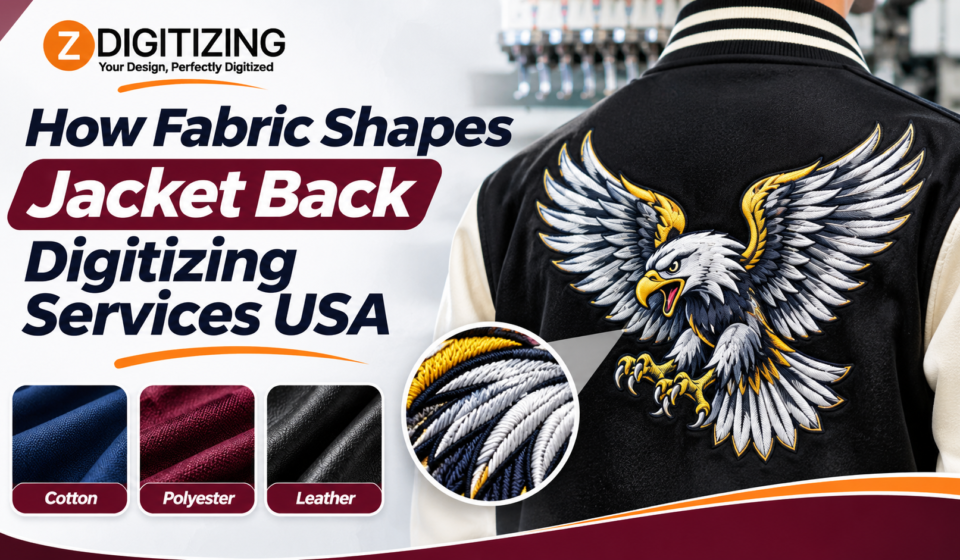

A large design can look different on denim than it does on leather or fleece because each fabric reacts to stitches in its own way. Our Embroidery Jacket Back Digitizing Services USA prepares artwork as machine-readable stitch instructions while taking the jacket material and placement into account. This guide explains what to consider for common fabrics and what to tell us before we digitize your design.
For Embroidery Jacket Back Digitizing Services USA, identify the exact jacket or fabric if you know it. Include a product photo or garment reference when the material is unfamiliar. Also provide the design dimensions, position on the back, and machine format so we can understand how the artwork will be used.
How Jacket Back Digitizing Services USA account for fabric
Embroidery adds thread and needle penetrations to a garment. A heavy jacket panel, soft fleece, leather surface, or flexible fabric can respond differently during sewing. The stitch plan should be considered alongside the fabric, not only the image. Design size, fill coverage, underlay, placement, and garment support all contribute to how the result looks.
ZDigitizing’s jacket-back service page specifically notes that denim may require tighter fills, leather needs lighter stitch density, and fleece benefits from underlay to help keep the stitches from sinking. Those examples show why a digitizer needs to know the material before preparing a large design. They are not universal machine settings; the actual design and garment still need review.
Digitizing considerations by material
Denim and canvas
Denim and canvas are common choices for embroidered jacket backs. Their weight and weave should be considered when planning filled areas and outlines. The service page notes tighter fills for denim. Share whether the panel is heavily structured, lined, or interrupted by seams, since these details affect the usable area and embroidery setup.
Leather
Leather calls for a considered stitch plan because dense stitching can affect the surface. The jacket service page highlights lighter stitch density for leather. Tell us the leather type if known, the finished design dimensions, and whether the embroidery shop has instructions for the garment. Confirm that the shop is equipped to embroider that specific jacket.
Fleece
Fleece has a soft pile that can cause stitches to sink into the surface. The service page notes underlay and recommends a topping as a production aid. Let us know that the jacket is fleece and discuss the stabilizer and topping approach with your embroiderer before sewing.
Wool, softshell, and other jacket fabrics
Wool, softshell, and blended materials may have different thickness, stretch, or surface texture. Do not assume that settings used for denim or fleece will automatically suit them. Name the fabric, share a garment photo, and ask the embroidery operator to confirm the appropriate setup for the item.
Design size and placement depend on the jacket
A jacket back offers more room than a small chest area, but the usable space still varies by garment. The service page provides sample width and placement guidance for jacket categories, including leather, denim or canvas, fleece or softshell, bomber or varsity, and work jackets. Treat those examples as a reference; measure the actual jacket and confirm its available embroidery area.
Placement should account for the shoulder yoke, center seam, pockets, lining, and panel shape. Mark the center of the back and identify whether the design should sit below a yoke or remain away from seams. The garment should be supported during sewing so its weight does not pull down on the hoop.
What to include in your Jacket Back Digitizing Services USA order
To help us understand the fabric and design, provide:
- A clear logo or artwork file, plus any approved reference.
- The jacket type and fabric, including lining or panel details if relevant.
- Final design width and height.
- Exact back placement and any seams or features to avoid.
- The requested embroidery style, such as flat, 3D puff, or appliqué, if applicable.
- The embroidery format your machine or shop needs.
- Notes about lettering, colors, and must-keep details.
If you have not chosen the jacket yet, explain which material you are considering and wait to confirm the final garment before production. Digitizing for an assumed fabric and then switching to another can create avoidable questions about whether the file suits the new item.
From artwork upload to checked file
Our service page describes a process that starts with artwork upload and order details. A digitizer manually prepares the design, then our QA team checks it before delivery. The page lists a typical 4–12-hour turnaround and urgent delivery in 1–4 hours, with complex designs potentially taking longer. Files are sent by email, and the page notes free minor revisions.
After delivery, review the file type, dimensions, placement, and artwork against your brief. Ask your embroiderer to sew a sample on the jacket or a comparable material. For a large back design, inspect the entire panel for alignment and check how the material handles the fill and outlines. If you notice an issue, describe it clearly before producing more garments.
Avoid treating all fabrics the same
A file prepared for one jacket is not automatically ideal for every other fabric. A leather design, fleece design, and denim design may need different planning. Even jackets made from the same broad material can vary in construction and usable embroidery area.
The best way to reduce uncertainty is to provide fabric information early and involve the embroiderer in confirming the garment, format, and placement. Our Jacket Back Digitizing Services USA can then be reviewed against the actual material and production plan. A test sew-out then checks the complete production combination, not just the digital file.
Our Jacket Back Digitizing Services USA help you prepare large designs with the material and intended use in view. Tell us what jacket you plan to embroider and include its size, position, and machine requirements with your artwork.
At ZDigitizing, we digitize jacket-back designs for several garment types and fabrics. Send us the artwork and material details to request a file for your production setup.
Frequently asked questions
How does denim affect jacket-back embroidery?
Denim is a heavier fabric, and ZDigitizing’s jacket service page notes that tighter fills may be needed. The exact stitch plan depends on the design, panel, and embroidery setup. Tell us the garment material and ask your embroiderer to test the file on the intended jacket.
Does leather need a different digitizing approach?
Yes. The service page notes lighter stitch density for leather. Share the leather garment details and confirm with your embroidery shop that it can sew the selected jacket. The design size and coverage should be reviewed against the actual surface and production instructions.
How do I keep embroidery from sinking into fleece?
The jacket service page notes underlay for fleece and recommends a topping as a production aid. Tell us that the garment is fleece, and discuss stabilizer and topping with your embroiderer. A test sew-out can help you assess how the stitches appear on the actual material.
Can one jacket-back file work on multiple fabrics?
Do not assume a file prepared for one material will suit every other jacket. Denim, leather, fleece, wool, and softshell can behave differently during embroidery. If you plan to use multiple fabrics, share the materials and sizes with us so the requirements can be reviewed.
What should I send for Jacket Back Digitizing Services USA?
Send the artwork, garment type and material, design size, placement, requested embroidery style, and required machine format. Include a product reference if the fabric or construction is unclear. Mention seams and other features that affect the back panel.