




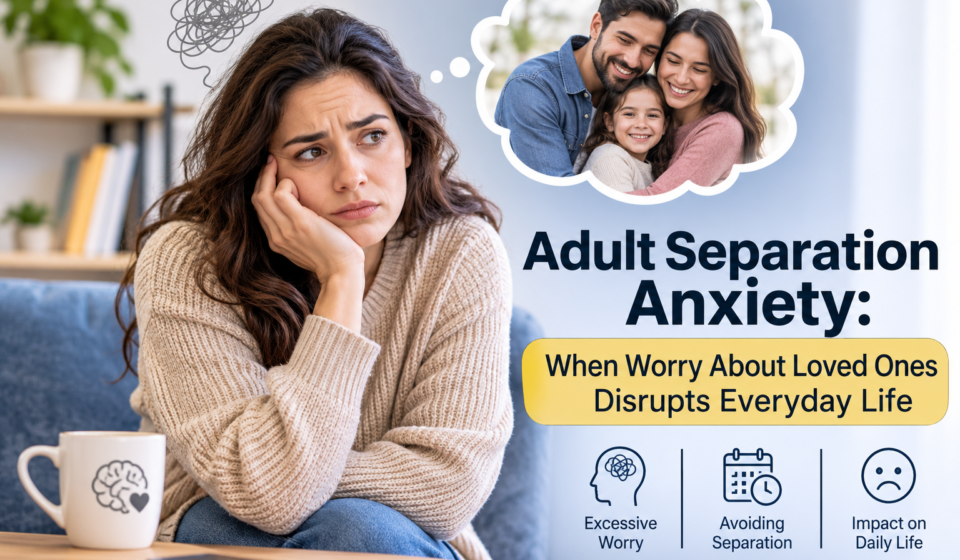

Being close to family members, a partner, or other important people can provide comfort, security, and emotional stability. However, when being apart from someone you love causes overwhelming fear, persistent distress, or an inability to concentrate on everyday responsibilities, the experience may involve more than ordinary concern.
Separation anxiety can affect how people manage relationships, work, travel, sleep, and daily activities. Some people feel constantly worried that something bad will happen to their loved ones when they are not together. Others struggle to leave home, spend time alone, or feel comfortable when a partner or family member is unavailable.
Although separation anxiety is often associated with children, it can also affect people later in life. Understanding its symptoms, causes, and effects can help people recognize when their worries are becoming difficult to manage and when professional support may be appropriate.
What Is Separation Anxiety?
Separation anxiety refers to excessive fear, anxiety, or emotional distress related to being away from people with whom someone has a close emotional attachment. These attachment figures may include a spouse, romantic partner, parent, child, sibling, or another person who provides emotional security.
People experiencing separation anxiety may feel distressed before separation even occurs. For example, someone might become anxious when their partner leaves for work, when a family member travels, or when they anticipate spending an evening alone.
Unlike temporary discomfort, separation-related distress may become persistent and interfere with a person’s ability to function independently. The anxiety may involve fear of losing a loved one, concern about their safety, or an overwhelming need to remain close or in constant contact.
Separation anxiety disorder is recognized in both children and adults. Symptoms can begin during adulthood, meaning a person does not necessarily need a history of childhood separation anxiety to experience the condition.
Common Separation Anxiety Symptoms
Symptoms may vary from person to person. Some experience mostly emotional distress, while others develop physical symptoms or behavioral changes when separation is anticipated or occurs.
1. Excessive Worry About Loved Ones’ Safety
One of the most common symptoms involves persistent fears that something terrible will happen to a loved one. A person may imagine accidents, illnesses, emergencies, or other dangers whenever their family member or partner is away.
Excessive worry about family safety may continue even when there is no specific reason to believe that the loved one is in danger. Someone may repeatedly check their phone, call several times, or struggle to focus until they receive reassurance that the person is safe.
These thoughts can become difficult to control and may take up a significant part of the day.
2. Strong Emotional Distress During Separation
Being away from an important person may trigger intense sadness, fear, restlessness, or a sense of emotional insecurity. Someone may feel overwhelmed when their partner travels, when their children are away overnight, or when they cannot immediately reach someone close to them.
This distress may begin hours before the separation. Even routine situations, such as a loved one going to work or attending an event independently, may create substantial anxiety.
3. Avoiding Activities That Require Being Apart
People experiencing separation anxiety symptoms may avoid activities that involve spending time away from attachment figures.
For example, someone may decline work travel, cancel social plans, avoid overnight stays, or refuse to attend events if a loved one cannot accompany them. They may also feel uncomfortable going shopping, exercising, or completing errands alone.
Over time, avoiding these situations may make independence feel increasingly difficult.
4. Difficulty Spending Time Alone
Some people find it extremely uncomfortable to remain alone at home or in unfamiliar places. They may feel unsafe, emotionally unsettled, or unable to relax unless someone they trust is nearby.
This is not simply a preference for company. The fear may become intense enough that the person rearranges their schedule, asks someone to stay with them, or avoids being alone altogether.
5. Physical Symptoms Associated With Separation
Separation-related anxiety can also affect the body. Symptoms may occur when someone anticipates leaving a loved one or when separation is already happening.
Common physical experiences can include:
- Rapid heartbeat or palpitations
- Stomach discomfort or nausea
- Headaches
- Sweating or trembling
- Muscle tension
- Difficulty sleeping
- Shortness of breath or feeling overwhelmed
These symptoms may increase when a person is unable to contact the individual they are worried about.
How Separation Anxiety Can Affect Everyday Life
The impact of separation anxiety is not limited to emotional discomfort. When fear repeatedly influences decisions, it can gradually interfere with several important areas of life.
Work and Professional Responsibilities
People may struggle to concentrate because their thoughts remain focused on a loved one’s whereabouts or safety. Frequent phone checking, leaving work early, or avoiding assignments that require travel can affect productivity.
Some individuals may turn down promotions, professional opportunities, or responsibilities because they fear spending more time away from home.
Romantic Relationships
Separation-related fears may create tension between partners. Someone experiencing anxiety may seek constant reassurance, feel upset when messages go unanswered, or interpret a partner’s independent activities as threatening.
Although these behaviors may come from fear rather than an intention to control, they can create misunderstandings, conflict, and emotional exhaustion for both individuals.
Social Activities and Independence
Friends, hobbies, exercise, and personal interests may become less important as someone increasingly organizes life around staying close to a loved one.
A person may stop attending social gatherings, avoid traveling with friends, or feel unable to make independent decisions. This gradual reduction in activities can limit personal growth and weaken other supportive relationships.
Sleep and Daily Routines
Anxiety may become more noticeable at night, especially when an attachment figure is away. Some people may struggle to fall asleep, repeatedly check their phones, or remain awake waiting for reassurance or contact.
Poor sleep may then contribute to daytime fatigue, irritability, difficulty concentrating, and increased emotional sensitivity.
Why Can Separation Anxiety Develop?
There is no single cause of separation anxiety disorder. It may develop through a combination of emotional, psychological, environmental, and life experiences.
Stressful or Unexpected Life Events
Major life changes may increase feelings of insecurity. Experiences such as bereavement, relationship difficulties, illness, relocation, or a frightening event involving someone close may intensify fears of losing another important person.
Following such events, an individual may become more sensitive to separation and seek frequent reassurance about their loved ones’ safety.
Changes in Relationships or Family Circumstances
A new relationship, becoming a parent, changes in caregiving responsibilities, or a family member’s health concerns can alter how people experience closeness and separation.
When emotional security becomes strongly connected to another person’s presence, routine separations may begin to feel threatening rather than manageable.
Other Mental Health Concerns
Separation anxiety may occur alongside other mental health conditions. However, experiencing excessive worry does not automatically mean someone has separation anxiety disorder.
A clinician may consider the person’s history, specific fears, symptom pattern, severity, and the way these concerns affect daily functioning before determining what may be contributing to the distress.
Normal Concern vs. Separation Anxiety Disorder
It is normal to worry about someone you love. Feeling concerned when a child is ill, a partner is traveling, or a family member is facing a difficult situation is part of having meaningful emotional connections.
The difference is often the intensity, persistence, and impact of the fear.
| Normal concern | Possible separation anxiety symptoms |
|---|---|
| Worry occurs in response to a realistic situation | Fear remains excessive or continues without a clear threat |
| Reassurance usually brings relief | Reassurance provides only temporary relief or is repeatedly needed |
| Separation may feel uncomfortable but remains manageable | Separation causes significant distress or panic-like feelings |
| Daily responsibilities continue | Work, relationships, sleep, or routine activities are disrupted |
| Independence remains possible | Activities may be avoided because separation feels unbearable |
Clinically, separation anxiety disorder involves a persistent pattern of excessive anxiety associated with separation from attachment figures. In adults, symptoms generally persist for six months or longer and cause meaningful distress or impairment.
Not every person experiencing fear of separation from loved ones meets the criteria for a mental health disorder. A professional evaluation is needed to determine whether symptoms reflect separation anxiety, another concern, or a response to life circumstances.
The American Psychiatric Association’s overview of anxiety disorders explains that separation anxiety disorder can affect both children and adults, and may involve excessive fear of separation that persists and interferes with functioning.
How Is Separation Anxiety Different From Generalized Anxiety?
Both conditions can involve excessive worry, restlessness, difficulty sleeping, and physical tension. However, the main focus of the fear differs.
In separation anxiety, worry primarily centers on being away from important attachment figures, losing them, or something happening to them during separation.
Generalized anxiety disorder involves excessive worry across several areas of life, such as finances, health, work, family responsibilities, and everyday situations.
For example, someone with separation anxiety may become highly distressed when their spouse is away and repeatedly fear an accident. Someone with generalized anxiety may worry about their spouse’s safety but also experience persistent anxiety about bills, job performance, health, and other unrelated situations.
The conditions can overlap, so symptom patterns should not be interpreted in isolation.
When Should Someone Consider Professional Support?
Consider speaking with a mental health professional if anxiety about separation:
- Persists for months or becomes increasingly intense.
- Makes it difficult to work, travel, sleep, or complete routine tasks.
- Leads to frequent checking, repeated reassurance-seeking, or distress when calls are unanswered.
- Causes avoidance of activities that were previously manageable.
- Creates ongoing tension in romantic, family, or social relationships.
- Makes spending time alone feel frightening or unbearable.
Early evaluation can help clarify the nature of the symptoms, identify other contributing concerns, and determine what type of support may be appropriate.
People experiencing persistent separation-related distress may benefit from professional support through telepsychiatry services, where mental health concerns can be discussed remotely with a qualified provider. An evaluation may include questions about symptom duration, emotional triggers, relationship patterns, medical history, sleep, daily functioning, and other anxiety symptoms.
At Cordial Psychiatry, people can explore mental health concerns through professional psychiatric care, including evaluations and treatment recommendations based on their symptoms and individual needs.
Treatment and Coping Strategies for Separation Anxiety
Managing separation-related distress often involves understanding the thoughts, feelings, and behaviors that maintain anxiety. Treatment depends on the person’s symptoms, severity, and overall mental health.
Psychotherapy
Psychotherapy can help individuals recognize anxious thought patterns, understand emotional triggers, and develop healthier responses to separation. Cognitive behavioral therapy (CBT) may help people examine catastrophic assumptions, reduce avoidance, and build confidence in managing uncomfortable situations.
A clinician may also help individuals understand how repeated reassurance-seeking or avoidance can unintentionally reinforce anxiety over time.
Gradually Building Comfort With Independence
When appropriate, a mental health professional may help someone practice manageable periods of separation. This can involve gradually returning to activities, spending short periods alone, or completing routine tasks independently.
The goal is not to eliminate meaningful relationships. It is to develop confidence that emotional security and personal independence can coexist.
Improving Emotional Regulation
Relaxation strategies, grounding exercises, regular sleep habits, and physical activity may support overall anxiety management.
When separation triggers intense distress, slow breathing, attention to the present moment, or a structured daily routine may help reduce emotional overwhelm. These strategies can complement professional treatment but are not substitutes when symptoms significantly impair functioning.
Psychiatric Treatment When Needed
Depending on the clinical assessment, a psychiatrist may discuss medication as part of a broader treatment plan. Medication decisions depend on individual symptoms, co-occurring conditions, medical history, potential benefits, and risks.
Treatment may also involve monitoring progress and adjusting the approach over time rather than relying on a single intervention.
Frequently Asked Questions
Can separation anxiety develop for the first time in adulthood?
Yes. Separation anxiety disorder can begin during adulthood. A person does not need to have experienced the condition as a child to develop clinically significant separation-related anxiety later in life.
Is it normal to worry constantly about my partner or family?
Occasional concern is normal, especially during stressful situations. However, persistent worry that feels uncontrollable, demands frequent reassurance, or interferes with your daily routine may warrant professional attention.
Can separation anxiety cause panic attacks?
It can. Separation or anticipation of separation may trigger intense fear and panic-like physical symptoms, including a racing heart, sweating, trembling, or difficulty breathing.
Can separation anxiety affect a person’s job?
Yes. Anxiety may affect concentration, attendance, travel, decision-making, and willingness to take on professional responsibilities that involve being away from loved ones.
Does separation anxiety improve with treatment?
Many people can learn to manage anxiety more effectively with appropriate support. Treatment may help reduce distress, improve daily functioning, and build healthier ways of handling separation. Progress varies depending on individual circumstances and other mental health concerns.
Conclusion
Separation anxiety can make everyday activities, relationships, and independence feel challenging. When worry about loved ones becomes excessive and starts interfering with daily life, professional support may help identify the underlying concerns and improve emotional well-being. With appropriate care, people can learn to manage separation-related distress while maintaining healthy relationships and confidence in their independence.