




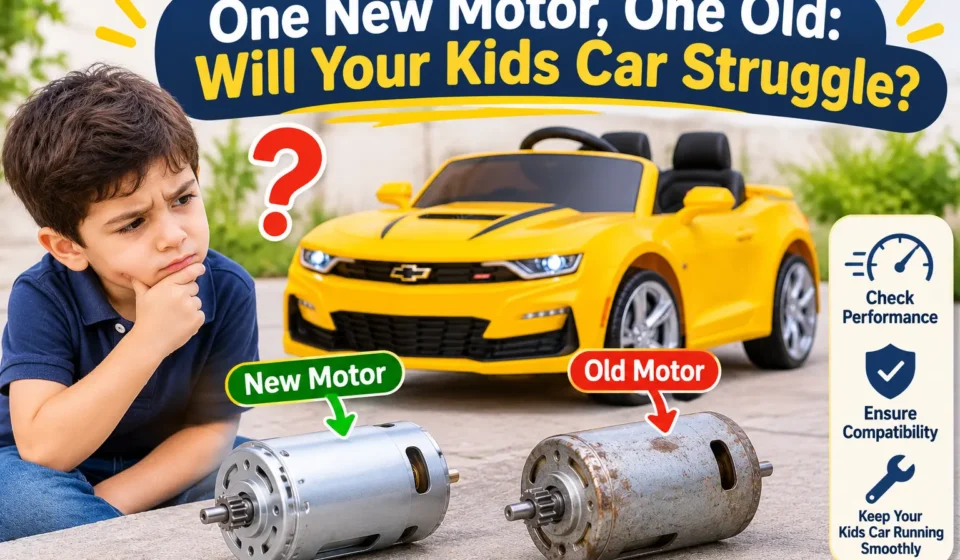

Kids Car models with two motors are designed to work together to provide smooth movement. But what happens when one motor stops working and gets replaced while the other is still old? At first, replacing only the damaged motor may seem like an easy and affordable solution. However, using one new motor with an older one can sometimes affect the vehicle’s speed, movement, and overall performance. The result depends on the condition of the old motor, the type of replacement, and how well both motors work together.
How Do Two Motors Work Together?
Some ride-on vehicles use two motors to power their wheels. Each motor helps move one side of the vehicle. When both motors are in good condition and have matching specifications, they can provide balanced movement.
For example, when a child presses the accelerator, both motors receive power and turn the wheels. If they work at a similar speed, the vehicle can move forward smoothly.
However, if one motor is new and the other is worn out, their performance may become different. One wheel may receive more driving power than the other, which can affect how the vehicle moves.
What Happens When One Motor Is New and the Other Is Old?
The difference between the two motors may not be noticeable immediately. However, some problems can appear during regular use.
1. Different Wheel Speeds
A new motor may work more efficiently than an older motor. If the old motor has lost some of its performance, it may not turn the wheel at the same speed.
This can create a difference between the two wheels.
For example, one wheel may rotate faster while the other moves more slowly. Depending on the vehicle’s design, this can cause uneven movement or make the vehicle pull slightly to one side.
2. Uneven Power During Driving
When both motors are working properly, they help provide balanced movement.
But if one motor is weaker, it may struggle to provide the same power as the new one. This difference can become more noticeable when the vehicle starts moving, carries weight, or travels on a slightly uneven surface.
The vehicle may feel less smooth than before.
3. More Pressure on the Old Motor
A worn motor may already have difficulty providing enough power. Continuing to use it alongside a stronger new motor may make its performance problems more noticeable.
If the old motor is damaged or struggling, it may produce more heat or draw more electrical current than expected.
This can also affect other electrical parts if the motor has a fault.
4. Changes in Battery Performance
Both motors use power from the same battery in many ride-on vehicles.
If one motor is working inefficiently or has an electrical problem, it may draw more current than normal. This can increase the total power demand.
As a result, the vehicle may use battery power faster than expected.
However, a difference in motor age alone does not always mean that battery life will decrease. The condition and electrical performance of both motors are more important.
5. Uneven Starting and Stopping
Have you noticed that a vehicle moves smoothly at first but starts behaving differently when accelerating?
A difference in motor performance can sometimes cause uneven starting or movement.
For example, the new motor may respond quickly when the accelerator is pressed, while the older motor takes longer to provide power.
This can make the vehicle feel less responsive.
Can You Use One New Motor With One Old Motor?
Yes, it may be possible, but it depends on whether both motors are suitable for working together.
Simply choosing a motor that fits the vehicle is not enough. Parents should check a few important details before replacing a motor.
Check the Motor Voltage
Both motors should be designed for the same operating voltage.
For example, if the vehicle uses 12V motors, replacing one with a motor designed for a different voltage may cause performance problems.
Check the Motor Specifications
Motor specifications such as speed, power, and current requirements should also match. Two motors may look similar but perform differently because of their internal design.
Check the Gearbox
The gearbox controls how motor power reaches the wheels. If one motor has a different gear ratio, the wheels may not rotate at the same speed.
Always check that the replacement motor and gearbox are suitable for the vehicle.
Check the Condition of the Old Motor
Before installing a replacement, inspect the old motor for unusual sounds, overheating, slow movement, or other signs of damage.
If the old motor is badly worn, replacing both motors may be a better option.
5 Signs That Both Motors Are Not Working Properly
Parents can notice several changes when the motors are not performing equally.
- The vehicle pulls to one side: It may move slightly left or right instead of travelling straight.
- One wheel moves more slowly: One side may appear weaker than the other.
- The vehicle struggles to start: It may take longer to begin moving after pressing the accelerator.
- Unusual motor sounds: One motor may produce grinding, clicking, or buzzing sounds.
- Shorter driving time: The vehicle may use battery power faster if a motor or electrical part is faulty.
These signs do not always mean that the motors are mismatched. Loose wires, damaged gearboxes, wheel problems, and battery issues can also cause similar symptoms.
Should You Replace Both Motors at the Same Time?
Replacing both motors is not always necessary. If the old motor is still in good condition and matches the new motor’s specifications, replacing only the damaged one may work perfectly well.
However, if the old motor is also weak, noisy, or overheating, replacing both can help restore more balanced performance.
For parents comparing a kids electric car, checking the motor power, number of motors, and availability of replacement parts can also be helpful before purchasing.
How Can You Keep Both Motors in Good Condition?
A few simple habits can help prevent unnecessary motor problems.
- Follow the weight limit: Too much weight can put extra pressure on the motors.
- Choose suitable surfaces: Avoid driving on surfaces that make the wheels struggle.
- Check the wheels: Make sure they rotate freely without getting stuck.
- Listen for unusual sounds: Grinding or clicking noises may indicate a motor or gearbox problem.
- Avoid water exposure: Keep electrical parts away from water and moisture.
- Check the wiring: Loose or damaged connections can affect motor performance.
- Use the correct replacement parts: Always match the motor specifications with the vehicle’s requirements.
When purchasing ride-on vehicles or replacement parts through online stores such as ToysUAE, checking the product specifications can help parents understand the motor setup and future maintenance needs.
Final Thoughts
Using one new motor with an old one does not always cause problems, but their specifications and condition matter. Differences in speed, power, and gearbox design can affect how smoothly the vehicle moves.
Before replacing a motor, check the voltage, motor specifications, gearbox, and condition of the existing motor. If both motors are not performing equally, have them inspected before continuing to use the vehicle.
With suitable replacement parts and regular checks, parents can help maintain smooth movement and keep the vehicle ready for enjoyable playtime.
Frequently Asked Questions (FAQs)
1. Can one new motor make the vehicle faster on one side?
Yes, it can happen if the new motor has different speed or power characteristics from the old one. However, other problems, such as a damaged gearbox or wheel, can also cause uneven movement.
2. Do both motors need to have the same voltage?
Yes. Both motors should be suitable for the vehicle’s electrical system and have matching voltage requirements.
3. Will using one new and one old motor damage the battery?
Not necessarily. However, a faulty or unsuitable motor may draw too much current and put extra pressure on the battery.
4. How do I know if one motor is weaker than the other?
Look for differences in wheel movement, unusual motor sounds, slow acceleration, or uneven driving. A technician can test both motors to identify the problem.
5. Is it better to replace both motors together?
If both motors are worn out, replacing them together may be a better choice. If the old motor is still working properly and matches the new one, replacing only one may be enough.
6. Can different motor speeds affect vehicle movement?
Yes. If the motors rotate at noticeably different speeds, the vehicle may move unevenly or pull to one side, depending on its design.