


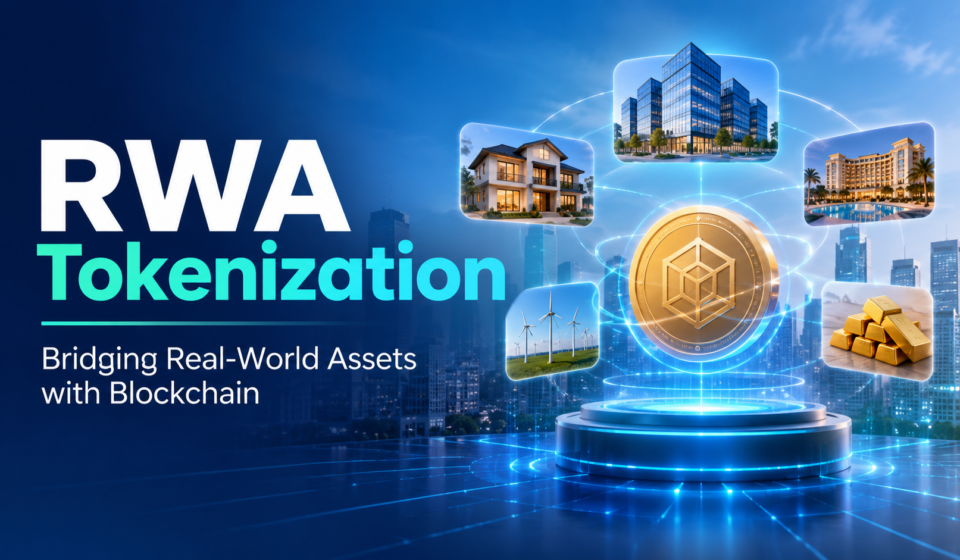

Accessing global capital has traditionally been challenging for asset owners, particularly those managing high-value physical assets, private investments, and revenue-generating business opportunities. Conventional fundraising methods often involve geographical restrictions, complex financial intermediaries, lengthy documentation, and limited investor reach. As businesses explore alternative financing models, Real-World Asset (RWA) tokenization is emerging as a way to connect traditional assets with digital investment infrastructure.
RWA tokenization services help asset owners convert rights associated with physical and financial assets into digital tokens on a blockchain. These tokens can represent ownership interests, debt obligations, revenue rights, or other legally structured financial interests. By combining blockchain technology with appropriate legal and financial frameworks, businesses can create investment opportunities that reach eligible investors across different markets.
With the support of RWA tokenization development services, asset owners can build digital platforms to manage asset representation, investor participation, transactions, and investment administration. This approach can open new possibilities for global fundraising while improving how assets are structured, distributed, and managed.
What Is RWA Tokenization and How Does It Support Global Fundraising?
Real-World Asset tokenization is the process of digitally representing ownership interests or economic rights connected to real-world assets using blockchain-based tokens.
These assets can include:
-
Commercial and residential real estate
-
Corporate bonds and debt instruments
-
Private equity and private credit
-
Gold and other commodities
-
Infrastructure projects
-
Agricultural assets
-
Trade finance and receivables
-
Revenue-generating business assets
Instead of depending entirely on traditional fundraising channels, asset owners can explore blockchain-based investment structures that support digital asset issuance and investor participation.
For example, a commercial property owner seeking capital for expansion could establish a legally compliant investment structure and issue digital tokens representing eligible interests in the property-owning entity. Qualified investors from different jurisdictions could participate according to applicable regulations and offering restrictions.
This creates an alternative fundraising channel that connects asset owners with a broader investor ecosystem.
7 Ways RWA Tokenization Services Help Asset Owners Access Global Capital
1. Expand Investor Reach Beyond Local Markets
One of the biggest challenges for asset owners is finding investors beyond their immediate geographical markets. Traditional fundraising often depends on local financial institutions, private networks, and regional investment communities. RWA tokenization can help businesses establish digital investment platforms that make eligible asset offerings accessible to a wider investor audience.
Through blockchain-based infrastructure, asset owners can:
-
Present investment opportunities through digital platforms.
-
Connect with eligible investors across multiple jurisdictions.
-
Manage investor onboarding and verification.
-
Distribute investment information digitally.
-
Support cross-border investment participation where legally permitted.
For instance, a real estate developer in Asia may explore raising capital from qualified investors in Europe or the Middle East through a properly structured tokenized investment offering.
This broader reach can help asset owners explore funding opportunities that may not be available through conventional local networks.
2. Enable Fractional Investment Opportunities
High-value assets often require substantial capital commitments, which can limit participation to institutional investors or high-net-worth individuals. Fractional tokenization provides another approach by dividing eligible ownership interests or economic rights into smaller digital units. For example, consider a commercial property valued at $10 million. Instead of seeking one investor to finance the entire opportunity, the asset owner could structure an offering with multiple investment units.
This model can help:
-
Expand access to eligible investor segments.
-
Create flexible investment participation structures.
-
Support capital formation from multiple investors.
-
Reduce dependence on a single funding source.
-
Make high-value investment opportunities easier to distribute.
However, fractional tokens do not automatically guarantee liquidity or unrestricted ownership. Their rights and transferability depend on the underlying legal structure and applicable securities regulations.
3. Improve Cross-Border Investment Infrastructure
International fundraising involves several operational challenges, including investor verification, regulatory requirements, payment processing, ownership records, and transaction administration. RWA tokenization services can help businesses develop infrastructure to manage these activities more efficiently.
Blockchain technology provides shared digital records that can support:
-
Token issuance and distribution.
-
Investor ownership tracking.
-
Transaction verification.
-
Automated compliance workflows.
-
Investment transfer management.
-
Distribution of eligible returns.
Smart contracts can automate predefined processes, such as token transfers, distribution calculations, and scheduled payments, subject to the terms of the offering. For asset owners targeting international investors, this infrastructure can help organize investment operations across different markets. However, blockchain-based systems do not replace local legal requirements, banking infrastructure, foreign exchange controls, or jurisdiction-specific investor protections.
4. Create New Financing Models for Different Asset Classes
Traditional fundraising methods are not equally suitable for every asset type. Some businesses own valuable assets but struggle to convert their economic potential into accessible investment opportunities.
RWA tokenization services allow asset owners to explore different financing structures based on the nature of their assets.
| Asset category | Potential tokenization model |
|---|---|
| Real estate | Fractional ownership or property investment interests |
| Corporate debt | Tokenized debt instruments |
| Gold and commodities | Asset-backed digital investment products |
| Private credit | Tokenized loan interests |
| Infrastructure | Project financing interests |
| Trade receivables | Tokenized receivable interests |
| Business revenue | Contractual revenue-sharing rights |
For example, an infrastructure company developing a renewable energy project could explore tokenizing eligible project-related investment rights to attract capital from qualified investors. Similarly, a business with outstanding trade receivables could investigate tokenized financing structures to access working capital. This flexibility allows asset owners to consider fundraising models beyond conventional equity financing.
5. Improve Investment Transparency and Ownership Tracking
Global investors need reliable information about the assets they are investing in, the rights attached to their investments, and how their interests are managed. Traditional asset administration may involve multiple intermediaries, separate databases, and manual reconciliation processes. RWA tokenization platforms can introduce blockchain-based recordkeeping to improve investment administration.
Key capabilities include:
-
Digital ownership records.
-
Transparent transaction histories.
-
Token issuance tracking.
-
Investor portfolio dashboards.
-
Smart contract-based distribution records.
-
Asset-related document management.
When properly designed, these features can help asset owners maintain consistent investment records and provide investors with better visibility into relevant transactions. It is important to remember that blockchain records alone do not establish legal ownership. The connection between digital tokens and enforceable asset rights must be supported by appropriate legal documentation and governance.
6. Support Secondary Market Opportunities
Investors often consider exit opportunities before committing capital. However, traditional investments in real estate, private credit, and other alternative assets may have limited transferability. Tokenization can help establish the technical infrastructure for secondary market trading of eligible digital investment interests.
A tokenized asset platform can incorporate:
-
Digital asset listing modules.
-
Investor trading interfaces.
-
Buy and sell order management.
-
Wallet integration.
-
Transfer restrictions.
-
Compliance verification.
-
Transaction settlement workflows.
For example, investors holding eligible tokens representing interests in a real estate investment structure may be able to transfer or trade those interests through an authorized secondary marketplace. This can potentially improve investment flexibility and create additional participation opportunities. However, tokenization does not automatically create liquidity. Secondary trading depends on regulatory approvals, marketplace availability, investor demand, transfer restrictions, and the underlying asset structure.
7. Reduce Certain Investment Administration Processes
Managing investments across different countries can create operational complexity for asset owners. Investor onboarding, ownership updates, payment distribution, reporting, and transaction reconciliation can require significant administrative effort. RWA tokenization development services can help businesses automate selected workflows through smart contracts and integrated platform modules.
For example:
-
KYC and AML verification integrations can support investor onboarding.
-
Smart contracts can execute predefined distribution rules.
-
Blockchain records can support transaction tracking.
-
Automated notifications can communicate investment updates.
-
Investor dashboards can provide access to portfolio information.
These capabilities can help streamline certain administrative processes and improve operational consistency as investment participation grows.
How RWA Tokenization Services Work: From Asset Evaluation to Global Fundraising
Launching a tokenized investment offering requires more than creating digital tokens. Asset owners need a complete framework covering asset evaluation, legal structuring, platform development, and investor management.
Here are the major stages involved.
Step 1: Identify and Evaluate the Asset
The first stage involves identifying the asset that will support the tokenization model.
Asset owners must evaluate:
-
Asset valuation.
-
Ownership documentation.
-
Existing liabilities.
-
Revenue-generating potential.
-
Investment suitability.
-
Legal restrictions.
This assessment helps determine whether the asset is suitable for tokenization and which investment structure may be appropriate.
Step 2: Establish the Legal and Financial Structure
Before issuing tokens, businesses must determine what the tokens legally represent.
Depending on the offering, tokens may represent equity interests, debt obligations, contractual rights, or beneficial interests through an appropriate legal entity.
This stage may involve:
-
Establishing an SPV or other suitable legal entity.
-
Preparing offering documents.
-
Defining investor rights.
-
Establishing transfer restrictions.
-
Reviewing securities regulations.
-
Addressing cross-border compliance requirements.
Legal and financial professionals should determine the appropriate structure based on the asset, investor locations, and offering model.
Step 3: Select the Blockchain Network
The blockchain network provides the technical foundation for token issuance and transaction management.
Asset owners should evaluate different blockchain networks based on:
-
Transaction speed and costs.
-
Security architecture.
-
Smart contract capabilities.
-
Ecosystem compatibility.
-
Wallet integration.
-
Regulatory and operational requirements.
Ethereum, Polygon, and other blockchain networks may be considered depending on the project’s technical and business requirements.
Step 4: Develop the RWA Tokenization Platform
The next stage involves building the platform that connects asset owners, administrators, and investors.
An RWA tokenization development company can help create a custom or white-label platform with essential functionalities.
Important platform modules include:
| Platform module | Purpose |
|---|---|
| Asset management | Register and manage tokenized assets |
| Token issuance | Create and distribute digital tokens |
| Investor dashboard | Manage investor accounts and portfolios |
| KYC/AML integration | Support identity and compliance verification |
| Smart contracts | Automate predefined investment operations |
| Wallet integration | Manage digital asset access |
| Payment integration | Support permitted investment transactions |
| Reporting dashboard | Track transactions and investment activity |
| Secondary marketplace | Facilitate eligible token transfers or trading |
The platform should be designed around the asset type, investment structure, target jurisdictions, and expected investor base.
Step 5: Launch the Investment Offering
After platform development, legal review, and security testing, the asset owner can prepare the tokenized offering.
This stage includes:
-
Publishing asset information.
-
Presenting investment terms.
-
Completing investor onboarding.
-
Distributing tokens to eligible investors.
-
Managing investment transactions.
-
Monitoring participation and compliance.
A well-structured digital offering can help asset owners reach eligible investors through a more organized investment distribution process.
Step 6: Manage Investors and Asset Performance
Tokenization does not end after fundraising.
Asset owners must continue managing investor relationships, asset performance, financial reporting, and contractual obligations.
An integrated RWA platform can support ongoing investment administration through portfolio dashboards, transaction histories, distribution management, and investor communication features.
Key Challenges Asset Owners Should Consider Before Global RWA Tokenization
Although RWA tokenization offers new fundraising possibilities, businesses must address several challenges before entering international markets.
Regulatory Differences Across Jurisdictions
Different countries have different rules governing securities, digital assets, investment offerings, and cross-border transactions.
Asset owners must identify the applicable regulatory requirements in every relevant jurisdiction.
Asset Ownership Verification
The underlying asset must have clear ownership documentation and legally enforceable rights. Disputes or unclear ownership structures can create significant risks.
Investor Trust and Due Diligence
Global investors need access to reliable asset information, valuation reports, financial documentation, and clearly defined investment terms.
Blockchain Security
Smart contract vulnerabilities, wallet security issues, and unauthorized transactions can affect investor confidence. Independent security audits and appropriate security controls are essential.
Liquidity Expectations
Tokenized assets are not automatically liquid. Asset owners should establish realistic expectations around redemption, transfers, and secondary market participation.
Addressing these challenges early can help businesses develop more sustainable tokenization projects.
How to Choose the Right RWA Tokenization Development Company
Selecting an experienced development partner is an important decision when building a global investment platform.
Asset owners should evaluate potential RWA tokenization service providers based on their technical expertise and understanding of asset-based investment models.
Consider the following factors:
1. Blockchain Development Expertise: Look for experience with smart contracts, token standards, wallet integrations, and blockchain infrastructure.
2. Asset Tokenization Experience: The development partner should understand different asset classes, including real estate, commodities, debt, private credit, and revenue-based assets.
3. Custom Platform Development: Choose a provider capable of developing solutions based on specific fundraising and investment management requirements.
4. Compliance-Oriented Architecture: The platform should support integrations and workflows for KYC, AML, investor eligibility, and transfer restrictions.
5. Secondary Market Capabilities: If future trading is part of the business model, evaluate the provider’s experience with marketplace development and compliant token transfers.
6. Scalability and Integration: The infrastructure should support growing investor participation, additional asset classes, and third-party financial integrations.
Working with the right development partner can help asset owners turn a tokenization concept into a functional digital investment ecosystem.
Future Opportunities: How RWA Tokenization Could Transform Global Capital Access
The RWA tokenization market is creating opportunities for businesses to rethink how capital is raised and distributed.
As blockchain infrastructure develops, asset owners may explore new investment models across industries that have traditionally depended on private funding networks or specialized financial institutions.
Some emerging opportunities include:
-
Real Estate Development Financing: Property developers can explore tokenized investment structures to fund residential, commercial, and mixed-use projects.
-
Private Credit Distribution: Lenders may use tokenization to structure eligible loan interests for qualified investors.
-
Infrastructure Investment: Renewable energy, transportation, and data center projects may explore digital investment distribution models.
-
Commodity-Backed Investments: Gold, agricultural products, and other commodities can support asset-backed investment structures.
-
Business Revenue Tokenization: Companies may explore tokenizing contractual rights linked to recurring revenue and future cash flows.
-
Cross-Border Investment Platforms: Businesses can develop digital infrastructure to manage eligible investment participation across multiple jurisdictions.
The broader opportunity lies in connecting traditionally illiquid or privately distributed investment interests with more accessible digital financial infrastructure.
Conclusion
RWA tokenization services are creating new possibilities for asset owners seeking to access global capital through blockchain-based investment infrastructure. By combining fractional investment structures, digital ownership records, smart contracts, and investor management systems, businesses can explore alternative ways to structure and distribute investment opportunities.
However, successful tokenization requires more than blockchain implementation. Asset verification, legal structuring, regulatory compliance, investor protection, and platform security must work together to support a sustainable investment model.