





A custom home should offer more than attractive architecture. It should provide comfortable living spaces, practical storage, efficient systems, and flexibility for changing household needs. Building a new residence gives you control over these features, allowing you to make decisions that support your lifestyle rather than adapting to an existing floor plan. In Kingsland, TX, local property conditions, warm weather, and the surrounding Hill Country landscape also influence important construction choices.
Working with experienced custom home builders in Kingsland, TX helps turn your ideas into an organized construction project. From initial planning and architectural design to material selection and final inspections, each stage requires careful coordination. Understanding the process allows you to make informed decisions and establish realistic expectations before construction begins.
Plan for Your Household’s Changing Needs
One of the biggest advantages of custom construction is the ability to design a home around your current routines and future requirements.
Instead of focusing only on the number of bedrooms, think about how different spaces will function over time.
Create Flexible Living Areas
A dedicated office can support remote work, while a multipurpose room provides space for hobbies, exercise, or additional storage.
Consider designing rooms that can serve different purposes as household requirements change. Wider doorways and thoughtfully arranged circulation areas can also improve accessibility.
Prioritize Storage
Insufficient storage often creates unnecessary clutter in otherwise well-designed homes.
Include practical storage solutions such as walk-in closets, pantry shelving, linen cabinets, garage storage, and dedicated utility spaces. Planning these features before construction helps avoid expensive modifications later.
Design Comfortable Shared Spaces
The kitchen, dining room, and living area often serve as the center of household activity.
Consider counter space, cabinet organization, appliance placement, seating arrangements, and convenient access to outdoor areas. A functional layout improves everyday movement and makes the home easier to maintain.
For Kingsland homeowners who frequently enjoy boating, fishing, or other recreational activities around Lake LBJ, dedicated storage for outdoor equipment and convenient access between indoor and outdoor spaces can make the home more practical.
Consider Energy Efficiency Before Construction
Texas summers make energy performance an important consideration. A home that controls heat transfer effectively requires less effort from its cooling equipment.
Several construction decisions influence indoor comfort.
Insulation: Properly installed insulation reduces heat movement through ceilings, exterior walls, and other building surfaces. Ask your builder about the proposed insulation R-values, which measure resistance to heat flow, and confirm that they meet applicable energy code requirements.
Windows: Energy-efficient glazing helps limit unwanted solar heat gain. Window orientation and exterior shading also influence indoor temperatures. Compare window performance ratings, particularly the U-factor and Solar Heat Gain Coefficient (SHGC), to evaluate heat transfer and solar heat gain in the warm Kingsland climate.
Air sealing: Gaps around doors, windows, plumbing penetrations, and other openings allow conditioned air to escape.
HVAC sizing: Heating and cooling equipment should be selected according to the home’s size, layout, insulation, and other building characteristics. Request a professional HVAC load calculation, such as ACCA Manual J, to determine the appropriate heating and cooling capacity.
Roofing materials: Suitable roofing systems and reflective finishes help manage solar heat exposure.
Discuss these features during the design stage instead of waiting until construction is nearly complete.
Make the Most of Your Kingsland Property
The characteristics of your building lot influence architectural design, construction costs, and outdoor usability.
Before finalizing plans, evaluate the property’s slope, soil conditions, drainage patterns, access points, and utility availability.
Rural properties around Kingsland may require a private water well and an on-site septic system when public water or wastewater connections are unavailable. Well drilling, water equipment, septic system design, installation, and electrical utility extensions can represent substantial site development expenses. Confirm utility availability and installation requirements before establishing your construction budget.
Shallow limestone and rocky terrain are also important considerations in the Texas Hill Country. Rock excavation may increase the cost of foundation preparation, utility trenching, and septic system installation. Evaluating subsurface conditions early helps determine whether specialized excavation equipment or additional site preparation will be necessary.
For properties near Lake LBJ, review applicable shoreline restrictions, easements, and local requirements before planning outdoor structures or construction activities. Check applicable floodplain maps and development requirements, as properties near the lake may be subject to additional restrictions concerning foundation elevations, drainage, and construction.
Outdoor living features such as covered patios, shaded seating areas, and appropriately positioned windows help connect indoor spaces with the surrounding environment.
Proper grading and drainage are equally important because rainwater should flow away from the foundation rather than collect near the structure.
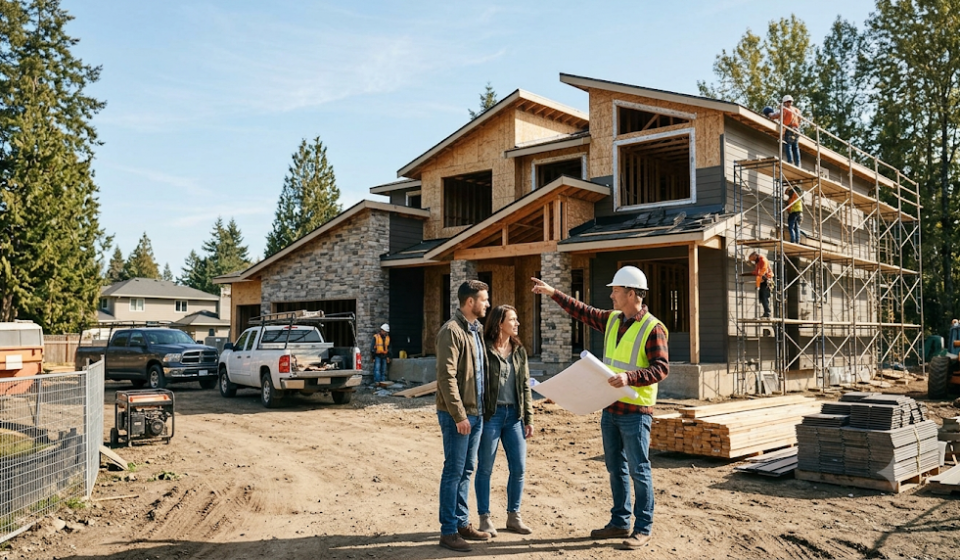
Understand the Custom Home Construction Process
Knowing the construction sequence helps you prepare for important decisions and project milestones.
A typical project includes:
- Initial planning: Establish your budget, preferred home size, design priorities, and property requirements.
- Design development: Finalize architectural layouts, structural details, and major building specifications.
- Permits and preparation: Address applicable approvals, site clearing, grading, and foundation preparation. Confirm which building, septic, floodplain development, or other permits are required by the authorities responsible for your Kingsland property before beginning the relevant work.
- Structural construction: Complete the foundation, framing, roofing, and exterior enclosure.
- Mechanical installation: Install plumbing, electrical systems, heating, and cooling equipment.
- Interior finishing: Complete insulation, drywall, flooring, cabinetry, fixtures, and paint.
- Final inspections: Review completed work, address outstanding items, and verify required approvals.
In addition to final inspections, confirm whether inspections are required at intermediate construction stages, including foundation, framing, electrical, plumbing, mechanical, and insulation work. Establish who is responsible for scheduling these inspections and obtaining the necessary approvals.
Regular communication throughout these stages helps prevent misunderstandings and unnecessary delays. Reviewing the builder’s custom home construction services can also help you understand how planning, site preparation, and construction activities are coordinated.
Budget for More Than the Basic Construction Price
A realistic construction budget should account for expenses beyond the main building structure.
Consider site preparation, utility connections, permits, architectural services, landscaping, driveways, appliances, and interior upgrades.
Review how the construction contract handles allowances, change orders, and the draw schedule. Allowances are estimated amounts allocated to materials or fixtures that have not yet been finalized. Change orders document modifications to the original construction agreement, including their effects on costs and scheduling. The draw schedule identifies when construction payments are due, typically according to agreed project milestones or progress.
Maintain a contingency allowance for unexpected site conditions or necessary design adjustments. Finalize major material selections early to reduce the likelihood of expensive changes during construction.
Experienced custom home builders in Kingsland, TX can help explain how design choices influence project requirements, costs, and scheduling.
Choose Quality Over Short-Term Savings
Reducing construction costs should not mean compromising essential structural components or building performance.
Evaluate materials based on durability, maintenance requirements, installation quality, and long-term value. Properly installed roofing, dependable plumbing, effective insulation, and quality windows contribute to a more reliable home.
Ask about construction warranties, communication procedures, inspection schedules, and how changes are documented.
Confirm the builder’s written warranty period for workmanship, mechanical systems, and structural components, as coverage and duration may differ. Review warranty exclusions, maintenance responsibilities, and the procedure for submitting warranty claims before signing the construction agreement.
Create a Home That Supports Your Future
Building a custom residence requires careful decisions about design, functionality, energy efficiency, and construction quality. A well-planned home supports daily activities while providing flexibility for future needs.
If you are preparing to build in Kingsland, start by evaluating your property, establishing a realistic budget, and identifying the features that matter most. A detailed construction plan helps transform your ideas into a comfortable, practical home suited to the Texas Hill Country.