





It’s 1 a.m., the essay’s due at nine, and you used ChatGPT for an outline and maybe a few sentences. Now you’re wondering whether your university’s software will flag it. An AI checker for university students can show you how a draft might read to a detection system before you hit submit, which beats finding out afterward. This article covers how these checkers work, why their results can be shaky, what to do when a paragraph gets flagged, and how to pair it all with proofreading so your final draft is clean and genuinely yours.
First, Know Your University’s Rules
Here’s the part most people skip. AI policies aren’t the same everywhere, and they often change from course to course. One lecturer might allow AI for brainstorming, while another bans it completely.
Before you worry about scores, check:
- The course syllabus or assignment brief
- Your university’s academic integrity page
- Whether you need to disclose AI use (some courses ask for a short note)
If you’re unsure, just email your instructor. It takes two minutes and saves a lot of stress later.
How These Checkers Actually Work
Most checkers look at how predictable your writing is. AI tends to choose the most likely next word and keeps a very even rhythm, so its text looks smooth and a bit flat. Human writing wanders more. We use odd phrasing, change sentence length, and say things in our own slightly messy way.
So a flagged paragraph usually means “this reads very uniform,” not “this was definitely written by a machine.” That’s a useful distinction, because uniform writing can be fixed.
Why You Can’t Treat the Result as Final
Detectors make mistakes, and students feel it the most. Some universities have reported cases of students being wrongly accused, and a few have even dropped detection tools over reliability worries. Research and university guidance also point out that non-native English writers and some neurodivergent students can get flagged more often, even when every word is their own.
So use any score as a hint, not a verdict. A high number doesn’t prove anything, and a low one doesn’t guarantee you’re safe. Your drafts, notes, and sources are your best protection, so keep them.
A Simple Pre-Submission Routine
Try this the night before a deadline:
- Check section by section. Paste one or two paragraphs at a time rather than the full essay, so you can see exactly what’s being flagged.
- Look at the flagged lines. Are they generic? Do several start the same way? Is there a claim with no example?
- Rewrite in your own voice. Add a point from your lecture, a source you actually read, or your own opinion.
- Verify your sources. AI sometimes invents references. If you can’t find a citation, cut it.
- Do a final proofread. Fix typos, tense slips, and awkward phrasing last, once the content is settled.
A Quick Before and After
Flagged version: “Climate change is a significant issue that affects many aspects of society and requires urgent action.”
Rewritten version: “After our week-six seminar on flood risk, it’s hard to see climate change as a distant problem. Cities like Karachi already deal with it every monsoon.”
The second one is specific, tied to coursework, and clearly written by someone who was in the room.
Mistakes Students Make
- Writing to please the detector. Chasing a perfect score often makes essays worse and weirder.
- Only swapping words. Synonyms don’t change the structure, so the problem stays.
- Relying on one tool. Different checkers disagree. Don’t panic over a single result.
- Leaving no paper trail. Save outlines, notes, and earlier versions in case you need to show your process.
- Skipping the human read. Read your essay aloud. If it doesn’t sound like you, change it.
Where Tools Fit In
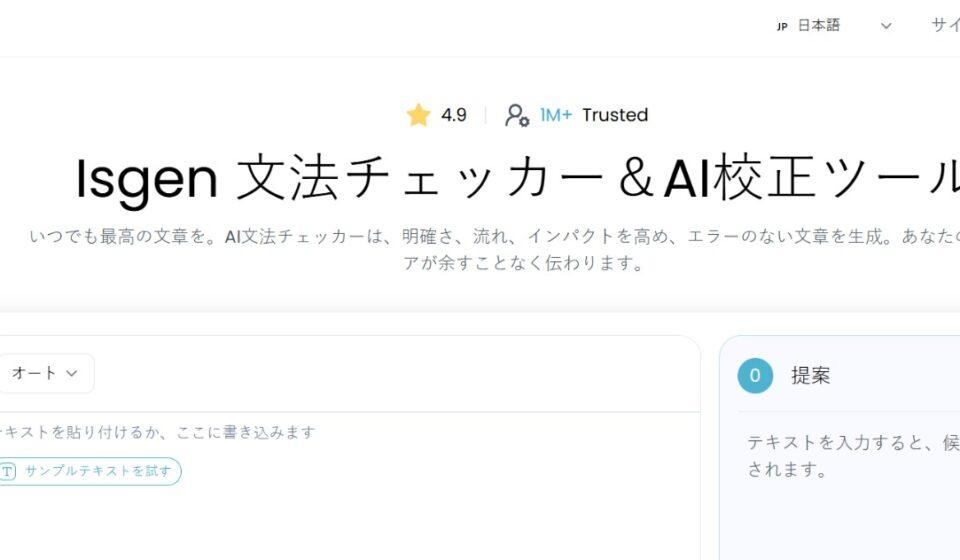
Doing every step by hand works for one essay, but it’s a lot when you’ve got three deadlines in a week. A tool like isgen.ai can speed up the first pass by showing which parts of a draft read as machine-like, so you know where to spend your editing time. Once your content is settled, a free online grammar checker & AI proofreading tool can catch the leftover typos and punctuation slips without touching your ideas. The order matters: fix your voice first, then polish the surface.
FAQs
Will using a checker get me in trouble?
Checking your own work isn’t a violation in itself. What matters is whether you followed your course’s AI rules.
Can my own writing be flagged as AI?
Yes. Very formal, polished, or template-style writing can look “predictable” to a detector, even when it’s entirely yours.
Do all universities use AI detectors?
No. Some do, some don’t, and some rely on lecturer judgment, oral questions, or drafts instead.
What should I do if my essay is wrongly flagged?
Stay calm, share your notes and draft history, and ask for a human review of your work.
How can I make my writing sound more like me?
Use everyday words, vary your sentence lengths, and include details only you’d know, like a class discussion or a personal observation.