






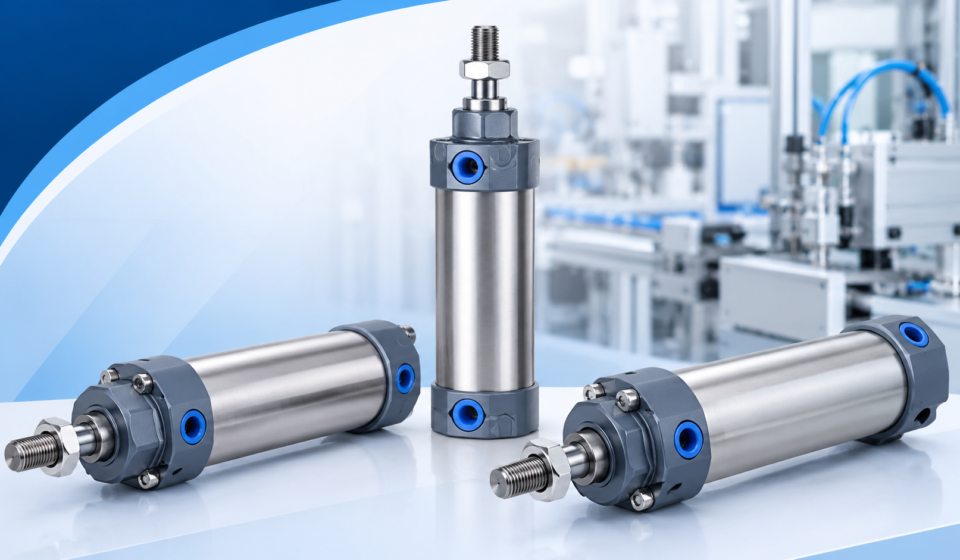

Pneumatic actuators perform repetitive mechanical movements across manufacturing facilities. Although their construction is relatively simple, operating conditions and mechanical wear can affect their performance over time.A Mercury Round Body Cylinder requires appropriate compressed air quality, correct installation and suitable operating conditions to function efficiently.
Identifying the early signs of operational problems helps maintenance teams prevent unnecessary component replacements and production interruptions.
This guide explains common pneumatic actuator problems, their potential causes and practical solutions.
1. Compressed Air Leakage
Air leakage is a common issue in industrial pneumatic systems. It can reduce available operating pressure and increase compressed air consumption.
Leakage may occur around piston rod seals, fittings, air connections or damaged tubing.
Common Causes
-
Worn or damaged seals
-
Loose pneumatic fittings
-
Damaged air supply tubing
-
Contamination inside the actuator
-
Excessive operating pressure
Solution
Inspect external connections and use an approved leak detection method. Replace damaged fittings or tubing when necessary.
If internal seals are damaged, check whether the selected cylinder is serviceable. Some round body designs require complete replacement rather than internal repairs.
2. Slow or Irregular Piston Movement
An actuator that moves slowly or inconsistently can affect machine cycle timing and production performance.
The problem does not always originate inside the cylinder. Restricted airflow or unsuitable control valve settings can produce similar symptoms.
Before contacting Mercury Round Body Cylinder Suppliers for replacement components, maintenance teams should examine the complete pneumatic circuit.
Common Causes
-
Insufficient air pressure
-
Restricted pneumatic tubing
-
Clogged air filters
-
Incorrect flow control settings
-
Excessive mechanical resistance
Solution
Check operating pressure, inspect air preparation equipment and verify airflow settings. Ensure that connected mechanical components move freely without obstruction.
3. Excessive Piston Rod Wear
The piston rod transfers mechanical force to the connected machine assembly. Incorrect installation or unsuitable operating conditions can accelerate surface wear.
Damaged rod surfaces may also affect seal performance and increase air leakage.
Common Causes
-
Incorrect cylinder alignment
-
Excessive side loading
-
Dust and abrasive contamination
-
Damaged mounting brackets
-
Mechanical impact
Solution
Inspect cylinder alignment and mounting arrangements. Use external guiding mechanisms where necessary to manage lateral loads.
Replace severely damaged components rather than continuing operation with compromised piston rod surfaces.
4. Insufficient Operating Force
Sometimes an actuator extends or retracts normally but fails to generate enough force to complete the required operation.
Maintenance teams should compare actual operating conditions with the original machine design.
Experienced Mercury Round Body Cylinder Dealers can assist buyers in identifying suitable alternatives when the existing actuator no longer meets equipment requirements.
Common Causes
-
Incorrect bore size
-
Low supply pressure
-
Internal air leakage
-
Increased mechanical load
-
Friction within connected equipment
Solution
Measure the available pressure and evaluate the application load. Verify whether the original actuator specifications remain suitable.
Increasing pressure beyond the rated operating limit is not an appropriate solution.
5. Unusual Noise and Mechanical Vibration
Pneumatic systems produce normal operating sounds during extension, retraction and air exhaust. However, unusual mechanical noise may indicate an underlying issue.
Excessive vibration can affect mounting stability and surrounding machine assemblies.
Common Causes
-
Loose mounting hardware
-
Excessive movement speed
-
Incorrect alignment
-
End-of-stroke impact
-
Worn mechanical connections
Solution
Inspect mounting hardware and adjust actuator movement speed where appropriate.
Check whether the application requires external cushioning or mechanical stopping arrangements to manage impact.
Operating conditions should remain within the component manufacturer’s recommendations.
6. Premature Seal Failure
Internal seals help maintain pressure separation within pneumatic actuators. Their condition directly influences movement efficiency and air leakage.
Contaminated compressed air and unsuitable operating environments can accelerate seal deterioration.
Common Causes
-
Moisture in compressed air
-
Dust and particulate contamination
-
Unsuitable lubricants
-
Excessive temperatures
-
Damaged piston rod surfaces
Solution
Maintain appropriate air filtration and moisture control. Follow the manufacturer’s lubrication requirements rather than adding lubricants without checking compatibility.
Inspect the complete system to identify the original cause before replacing damaged components.
Best Preventive Maintenance Practices
A structured maintenance programme helps industrial businesses identify developing pneumatic system problems.
Maintenance teams should conduct regular visual inspections, monitor movement consistency, check mounting arrangements and examine air connections.
Keeping records of component failures can help identify recurring operational issues.
If similar failures occur repeatedly, the underlying problem may involve machine design, air quality or component selection rather than normal wear.
Always isolate the machine, depressurise the pneumatic circuit and secure moving loads before carrying out maintenance.
When Should You Replace a Round Body Cylinder?
Not every operational issue requires complete cylinder replacement. External air supply problems and unsuitable mounting conditions may be corrected without purchasing a new actuator.
However, replacement may become necessary when the housing is damaged, the piston rod is severely worn or internal seals fail in a non-serviceable design.
V.S. Enterprises is a Mercury Round Body Cylinder Distributor in India that supplies pneumatic components for industrial maintenance and automation applications.
Buyers can provide existing model information and operating requirements to identify suitable replacement configurations.
Conclusion
Most pneumatic actuator problems can be investigated through systematic inspection of the compressed air circuit and connected machinery.
Identifying leakage, mechanical misalignment, inadequate pressure and contamination helps maintenance teams address the source of operational problems.
Correct maintenance and suitable replacement decisions can support equipment reliability and reduce avoidable production interruptions.
Frequently Asked Questions
1. Why is my pneumatic cylinder moving slowly?
Possible causes include insufficient air pressure, restricted airflow, incorrect flow control settings or excessive mechanical resistance.
2. What causes air leakage in round body cylinders?
Damaged seals, loose fittings, rod surface wear and contaminated compressed air can contribute to leakage.
3. Can Mercury round body cylinders be repaired?
Some models may be serviceable, while others require complete replacement. Confirm the specific model before attempting repairs.
4. How can I prevent premature piston rod wear?
Maintain correct mechanical alignment, minimise side loads and protect the rod from abrasive contamination.
5. When should a pneumatic cylinder be replaced?
Replacement may be necessary when significant mechanical damage or non-serviceable internal failures affect safe and reliable operation.