





Industrial machines operate under changing loads, vibration and continuous working cycles. Their performance depends not only on major components such as motors, shafts and bearings but also on the smaller fasteners that hold assemblies together. An unsuitable fastening component can create fitting problems, increase maintenance requirements and affect equipment reliability.
For engineers and maintenance teams, selecting the right fastener is therefore an important part of machine design. Understanding how bolt design, installation conditions and operating environments work together can help businesses make better fastening decisions.
Why Fasteners Matter More Than Their Size Suggests
A machine may contain hundreds of fastening points, each performing a specific role in holding components together. If one joint becomes loose or fails to maintain the required clamping force, it can affect the stability of connected parts.
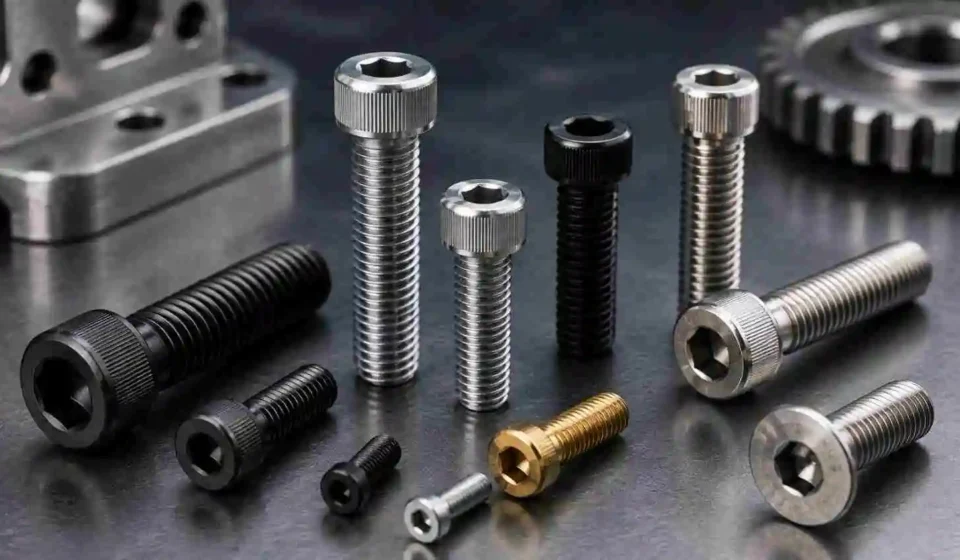
An Allen Bolt is commonly used in machinery and equipment where an internal hexagonal drive offers practical installation advantages. Its design allows tightening with an Allen key, making it useful in assemblies where access for conventional spanners is restricted.
However, reliable fastening depends on choosing the correct dimensions, material and head configuration. Engineers must consider the joint design and operating conditions rather than selecting a bolt based only on its appearance.
How the Right Bolt Design Makes Maintenance Easier
Maintenance teams frequently work around protective covers, compact housings and closely positioned machine components. In such arrangements, tool access can become a challenge.
The internal hexagonal socket of an Allen bolt allows technicians to apply tightening force from the top. This can simplify installation and removal when the surrounding design limits access from the sides.
Different head profiles serve different assembly requirements. Socket head cap screws provide a cylindrical head with an internal drive and are widely used in mechanical assemblies. Button head designs offer a rounded profile, while countersunk versions can sit flush with a suitably prepared surface. Low head designs may help where vertical clearance is limited, subject to the required mechanical specifications.
Selecting the appropriate profile during the design stage can reduce installation difficulties during later maintenance work.
What Happens When Fasteners Do Not Match Operating Conditions?
Machines rarely operate under identical conditions throughout their service life. Temperature changes, vibration, moisture and repeated loading can influence fastening joints.
A bolt selected without considering these factors may not provide the required performance. For example, an unsuitable material may be vulnerable to corrosion in a humid environment. Incorrect dimensions can affect thread engagement, while inappropriate tightening practices may damage the socket or compromise the joint.
Engineers should also consider the possibility of loosening under vibration. Depending on the application, the joint design may require suitable locking arrangements or other measures to maintain fastening security. Simply increasing tightening torque is not a reliable solution and may damage the fastener or connected components.
A properly designed joint considers the bolt, mating materials, loading conditions and installation procedure together.
Choosing Materials That Match Industrial Demands
Material selection influences strength, durability and resistance to environmental conditions. Alloy steel fasteners are often considered for applications requiring higher mechanical strength, while stainless steel options may be suitable where corrosion resistance is important.
Grades such as 8.8, 10.9 and 12.9 have different mechanical properties. The correct grade should always follow the engineering design and applicable specification.
Stainless steel options such as SS 304 and SS 316 may be considered for different operating environments. Buyers should evaluate exposure conditions and material compatibility before finalising their selection.
Surface finishes such as zinc plating or black oxide may also be specified according to application requirements. The selected finish should complement the material and intended working environment.
How Industrial Buyers Can Build a Smarter Sourcing Strategy
Consistent sourcing helps maintenance departments and production teams avoid unnecessary variation between replacement components and new assemblies.
When evaluating Allen Bolts Suppliers, buyers should check whether product dimensions, materials and finishes match their technical requirements. Clear specifications make it easier to compare quotations and reduce the risk of receiving an unsuitable product.
Businesses purchasing through Allen Bolts Wholesalers may also need to consider stock availability, packaging and the ability to fulfil repeat orders. Similarly, Allen Bolts Dealers should be able to provide clear product information and help buyers identify the correct configuration.
For companies sourcing Allen Bolts Suppliers in India, Allen Bolts Wholesalers in India or Allen Bolts Dealers in India, product suitability and dependable supply should remain central to the purchasing decision. Maintaining approved drawings and purchase specifications can further improve consistency across future orders.
Frequently Asked Questions
1. Where are Allen bolts commonly used?
They are used in machinery, automotive assemblies, equipment housings, fixtures and other mechanical applications that require an internal hexagonal drive.
2. Can Allen bolts be used in vibrating machinery?
They can be used where the joint design and fastener specifications are suitable. Engineers should consider vibration, loading and appropriate locking arrangements.
3. How does the head design affect installation?
The head profile influences tool access, available clearance and the way the fastener fits within the assembly.
4. Why should replacement bolts match the original specifications?
Matching dimensions, material and grade helps maintain the intended joint performance and reduces compatibility problems during maintenance.
Conclusion
Machine reliability depends on the performance of every component within an assembly, including its fastening joints. Correct bolt selection, suitable materials and proper installation practices can help maintenance teams reduce avoidable fastening issues.
Businesses evaluating Allen Bolt Manufacturers should consider technical specifications, product consistency and the ability to support industrial requirements. Kiran Industries provides fastening solutions for businesses involved in machinery, engineering and manufacturing.