






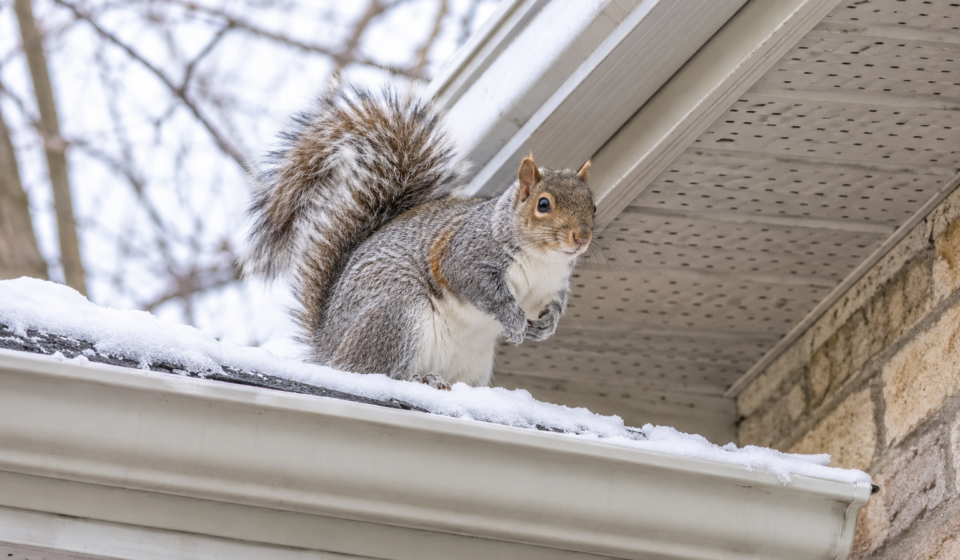

When the first hard freeze arrives in Ontario, squirrels start looking for shelter. Eastern grey, black and red squirrels do not hibernate, so they need a warm, dry place to ride out the cold. To a squirrel, your attic looks perfect.
Why Winter Is Prime Time for Squirrel Problems
Snow and freezing temperatures cover natural food and expose tree nests to wind. Squirrels move toward houses, where roof gaps, loose soffits and damaged vents give them an easy way in. Many also start their winter breeding season in late winter, so a female looking for a safe den may settle in your attic well before spring.
Signs of Squirrels in the Attic
- Scratching and scurrying in the morning and afternoon, because squirrels are daytime animals
- Rolling and thumping sounds from stored nuts and food
- Chewed wood and wires near vents and roof edges
- Shredded insulation and nest material such as leaves and twigs
- Small oval droppings scattered around the attic
The Risks of Waiting
Squirrels chew constantly, and in an attic that means electrical wiring, wood framing and ductwork. Chewed wires are a fire risk, and nesting flattens insulation, which makes your heating system work harder during the coldest months. Urine and droppings add odours and stains that can spread into ceilings.
What Professional Wildlife Removal Solves
Trying to handle squirrels yourself often fails, because new animals can return to the same open hole. A professional service covers the whole problem:
- Inspection to find every entry point
- Humane removal of the animals, with extra care if babies are present
- Repairs to seal and reinforce the openings
- Cleanup of damaged insulation and droppings
If you are in the Greater Toronto Area, GTA Pest Solutions offers professional wildlife removal designed for exactly these winter attic problems.
Common Entry Points on Ontario Homes
Squirrels are excellent climbers and can jump several feet from trees, fences and power lines onto a roof. Once there, they look for weak spots. Common entry points include:
- Gaps where the roof meets the wall
- Torn or loose roof vents
- Damaged soffits and fascia boards
- Uncapped chimneys and gable vents
- Rotted wood around dormers and eaves
Winter ice and heavy snow make these weak points worse. Ice dams lift shingles and trap moisture, and the rot that follows gives squirrels softer wood to chew through. Even a hole the size of a golf ball is enough for an big squirrel to get in.
How to Tell Squirrels From Other Winter Attic Animals
Not every noise in the attic comes from a squirrel, and the right plan depends on the animal.
- Squirrels: light, quick movement during the day, along with chewing sounds.
- Raccoons: heavy thumping and dragging, mostly at night.
- Mice and rats: soft scratching and squeaking inside walls, mostly after dark.
Write down when you hear the noise and what it sounds like. This helps a technician identify the animal faster, and a proper inspection will confirm which animal you have and how many are inside.
Why DIY Fixes Often Fail
Many homeowners try loud radios, mothballs or quick patches with foam or tape. These rarely work. Squirrels get used to noise, mothballs are not designed for this use and can be harmful to people and pets in enclosed spaces, and soft patch materials are chewed through within days.
Worse, a patch placed while a mother is out searching for food can trap her babies inside, and she may damage the roof trying to get back in. Working on a snowy, icy roof is also dangerous. A professional has the equipment, training and experience to handle the job safely.
Simple Winter Tips to Keep Squirrels Out
- Trim tree branches so they sit well away from the roofline.
- Cover vents with strong metal mesh instead of thin plastic.
- Repair soffits and fascia boards before the heaviest snow arrives.
- Move bird feeders away from the house, since they attract squirrels close to your roof.
- Check the roof after storms for lifted shingles or fresh damage.
If you can, do these checks in the fall. Fixing a small gap costs far less than repairing an attic after a winter of squirrel damage.
Final Thoughts
A cold Ontario winter makes your attic very attractive to squirrels. Act at the first scratching sound, avoid sealing animals inside, and get a trained team to remove them and fix the entry points.
About the author: The team at GTA Pest Solutions helps homeowners across the GTA with wildlife and pest problems.