




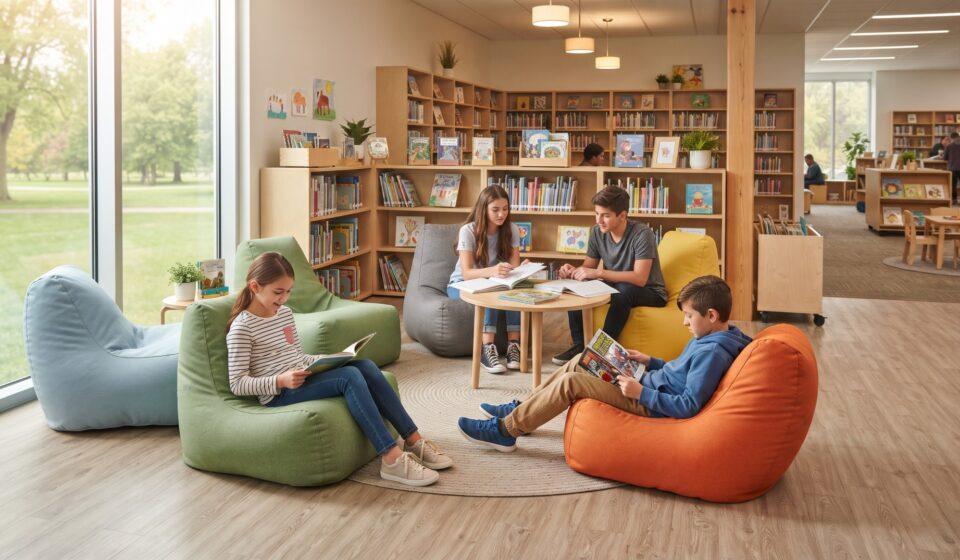

Library floors haven’t gotten bigger. But the people using them have gotten more varied. A storytime session, a teen study group, and solo readers can all share the same space on the same afternoon.
Most library furniture wasn’t designed for that. It’s heavy, hard to move, and built for one setup. That means a lot of floor space stays locked in, even when the needs keep shifting.
So what actually helps? Bean bag chairs. They’re easy to reposition, fit into awkward corners, and work across age groups. For libraries trying to stretch their square footage, that kind of adaptability is worth paying attention to.
Why Fixed Seating Keeps Working Against Libraries
Most library furniture is designed to stay in one place. That sounds fine, until the space needs to do three different things in a single afternoon. Fixed seating just doesn’t flex.
Here’s what that looks like in practice:
- It locks the floor plan in place, so when the room’s needs shift, the furniture doesn’t
- Heavy chairs and bulky tables can’t be repositioned by one staff member without real effort
- Corners and alcoves often go unused because fixed pieces don’t fit irregular shapes
- One rigid layout can’t serve a storytime group and a quiet solo reader at the same time
That kind of rigidity quietly eats into usable space, day after day.
What Bean Bag Chairs Actually Bring to a Library Layout
The short answer is flexibility. But it’s worth being specific about what that actually means in a real library setting, because “flexible seating” gets thrown around a lot without much to back it up.
They Move Without a Crew
Bean bag chairs are light enough for one staff member to carry across the room. That alone changes how a library can function throughout the day. A corner that holds a quiet reading setup in the morning can be cleared and rearranged for a group session by the afternoon, without calling in extra hands.
They Fit Where Traditional Furniture Won’t
Shelving alcoves, bay windows, and irregular corners usually go to waste with standard furniture because nothing fits cleanly. Bean bags don’t have that problem. They sit comfortably in tight or awkward spots and actually make those areas usable for solo reading or small group work. That’s reclaimed floor space most libraries didn’t know they had.
They Work for More Than One Age Group
Kids naturally gravitate toward low, comfortable seating. Teens do too, especially in spaces that don’t feel like a classroom. And adults settling in for extended reading appreciate that same kind of comfort. So bean bag chairs aren’t just a children’s section solution.
On top of that, because they sit low to the ground, staff can maintain clear sightlines across the room even when the space is full. That’s a practical detail worth noting.
The Right Zones for Bean Bag Chairs Inside a Library
Not every spot in a library works the same way. Some areas see constant traffic; others barely get used at all. The good news is that bean bag chairs work well in both, but knowing where to place them first makes the difference between a layout that feels thoughtful and one that just looks like furniture got scattered around.
Children’s Reading Corners
This is the most natural starting point for any library considering soft seating. Younger kids don’t sit still in rigid chairs for long, but give them something low, soft, and a bit informal, and that changes. Bean bag chairs keep children comfortable and settled, which means they actually stay in the space longer.
One thing worth getting right from the start: covers in this zone need to be wipeable or machine-washable. Spills and sticky hands aren’t occasional here; they’re guaranteed. Choosing bags with removable covers saves a lot of headaches later.
Teen Zones and Study Nooks
Teens tend to avoid anything that feels stiff or classroom-like. That’s not a knock on them; it’s just how that age group uses shared spaces. Bean bag seating sends a clear signal that the area belongs to them, not to the building.
What’s also practical about this zone is that the seating can cluster for group projects or spread out for solo work, without any rearranging needed. It adapts to however the group shows up that day.
Quiet Alcoves and Window Seats
These spots are chronically underused in most libraries because standard furniture doesn’t fit well into them. Bean bags do. A larger, well-filled bean bag next to a window becomes a genuinely comfortable reading spot for adults during extended sessions.
And the added benefit here is that these placements make the space feel intentional. It doesn’t look like leftover furniture; it looks like someone actually thought about how the room gets used.
Making the Most of What’s Already There
Library spaces aren’t shrinking, but the demands on them keep growing every year. Bean bag chairs don’t solve every layout challenge, but they do fill a very specific gap that traditional furniture simply can’t. That’s definitely worth something.
The real takeaway is that adaptable seating lets a library do more with what it already has on hand. No renovation needed, no major budget overhaul, just furniture that works with the space instead of constantly fighting against it.
How a library gets used has changed quite a bit over the years. Storytime, group study, quiet solo reading, and community events can all share the same floor on the same day. And soft seating that moves and adjusts isn’t a luxury at that point. It’s just practical.