






Zakat is the obligatory annual charity of 2.5% that a Muslim pays on qualifying wealth above the Nisab. Zakat is the third pillar of Islam. The Quran pairs Zakat with prayer more than 80 times. Let’s walk through what Zakat means, who pays it, and how you give it correctly.
What does Zakat mean in Islam?
Zakat means “purification” and “growth”. Giving Zakat purifies your wealth from greed. Giving Zakat also grows your blessings. In Islamic law, Zakat is a fixed share of wealth that belongs to the poor. The poor do not receive Zakat as a favour. They receive it as a right.
You calculate Zakat by adding your qualifying wealth, subtracting short-term debts and multiplying the result by 2.5%. The calculation takes about ten minutes. Here are the five steps, with a real example at the end.
Why is Zakat so important?
Zakat is important because Allah made Zakat a pillar of Islam. Zakat does three jobs. Zakat purifies the giver. Zakat feeds and protects the poor. Zakat keeps wealth moving through the Ummah instead of staying with a few.
The Prophet Muhammad (peace be upon him) taught that charity never decreases wealth. Many Muslims say the year they paid Zakat faithfully felt the most blessed.
What is the Nisab and why does it matter?
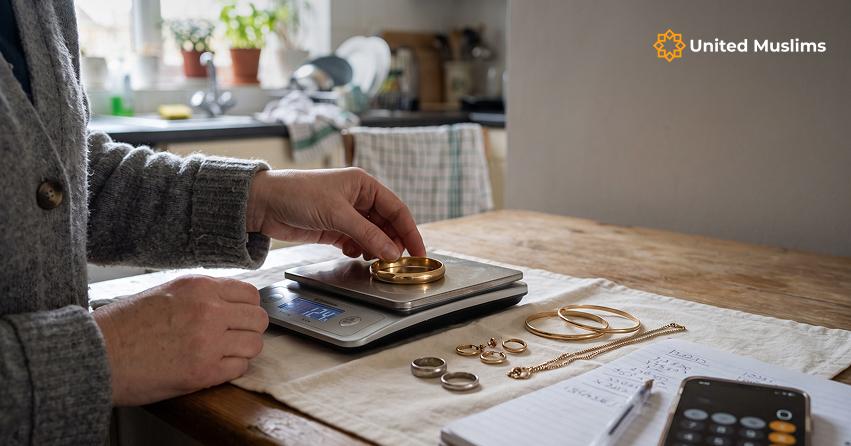
The Nisab is the minimum wealth that makes Zakat obligatory. The Nisab equals 87.48 grams of gold or 612.36 grams of silver. Silver gives a lower threshold, so many scholars recommend the silver Nisab because more people in need benefit. Check today’s metal price, then compare your total wealth to that figure.
What is the Hawl?
The Hawl is one complete lunar year of holding wealth above the Nisab. Choose one fixed date each year, such as 1 Ramadan, and calculate on that date. If your wealth stayed above the Nisab through the year, the Hawl is complete.
Which assets count toward Zakat?
Cash, savings, gold, silver, business stock, investments and money owed to you count toward Zakat. Add up each of these:
- Cash in hand and balances in all bank accounts.
- Gold and silver held as savings, including bullion and coins.
- Business inventory intended for sale.
- Shares and funds held to trade or grow.
- Debts others owe you that you expect to collect.
- Rental income you saved.
Your home, personal car, furniture and clothing do not count.
Which debts can you subtract?
You subtract debts due within the year. Credit card balances, unpaid bills and loan instalments due this year qualify. For a mortgage, most scholars allow you to deduct only the instalments due in the current year. The remaining number is your net Zakatable wealth.
How do you apply the 2.5% rate?
You multiply your net wealth by 0.025. If net wealth sits below the Nisab, no Zakat is due that year.
Here is a worked example. Maya holds 12,000 in savings and 3,000 in gold. Maya owes 1,000 in short-term debt. Net wealth equals 14,000. Zakat equals 14,000 × 2.5% = 350.
What mistakes do people make?
The most common mistakes are forgetting secondary accounts, skipping gifted gold and deducting a whole mortgage. Another mistake is rounding down. Round up instead. Any extra becomes Sadaqah. Keep a short record each year so next year’s calculation takes minutes.
How do you pay your calculated Zakat?
You pay Zakat to eligible recipients, directly or through a trusted charity. United Muslims delivers Zakat under a 100% donation model, with no administration deducted.
Once you have your figure, you can calculate and donate your Zakat today. Complex cases like business assets, pensions or investments need a qualified scholar’s advice before you finalise the amount.
Zakat is a trust between you and Allah. Calculate honestly, pay promptly and ask Him to accept it.